


Picture a traveler planning a long weekend in your city. Instead of opening Google, they open ChatGPT and type: “What’s the best food tour here?” In seconds, it names three operators with a brief description of each. The traveler picks one and books. You were never mentioned. You had no idea you were even in the running.
It’s already happening. New Arival research shows two in three travelers now use AI when planning trips. In the U.S., more than one in four use AI to find a tour, and nearly one in three use it to find attractions. A year ago, AI barely registered as a discovery channel. Now it’s one of the top ways travelers find things to do.
If you run tours, activities or attractions, AI search is already deciding who gets recommended and who gets ignored. This guide breaks down what’s changed, why it matters, and what you can do about it — starting today.
Here’s what we’ll cover:
- How AI Search Actually Works and Why It Matters for Operators
- GEO & AEO: the New SEO Operators Need to Know
- Review Platforms, OTAs and Third-Party Presence
- Practical Steps to Improve Your AI Search Visibility Today
- Navigating the Future: What Operators Should Watch in 2026 and Beyond
- Getting Found in the Age of AI: Key Takeaways for Operators
- Take Your AI Skills to the Next Level
How AI Search Actually Works and Why It Matters for Operators
For most of the internet era, getting found online was pretty straightforward: rank on Google, get clicks, turn visitors into bookings. SEO was competitive and technical, sure, but at least the rules were consistent. AI-powered search has blown up that playbook, and most operators are still figuring out what comes next.
From Blue Links to AI Answers
Traditional search worked by ranking web pages. A traveler searched “walking tour Rome,” Google returned a page of links, and they clicked the ones that looked promising. The operators who invested in SEO got traffic. The ones who didn’t, didn’t.
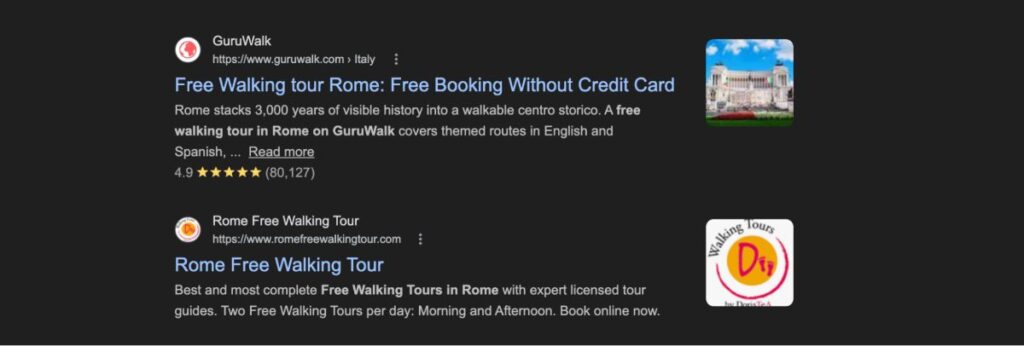
AI search flips all of that. When someone asks ChatGPT, Claude, Gemini or Perplexity “what’s the best food tour in Barcelona,” the AI pulls information from across the web and just… recommends specific operators or OTAs directly. Sometimes it doesn’t even return links. The traveler may never visit your website at all.
People in the industry call this the “zero-click problem” — the AI gives the answer, and the traveler moves on without ever visiting your site.
And it’s probably happening more than you’d guess: Arival research shows nearly half of AI-using travelers rely on ChatGPT for trip planning, 30 percent use Gemini, and 22 percent engage with AI-powered summaries right inside Google search.
Where Tour Operators Are Losing Visibility Right Now
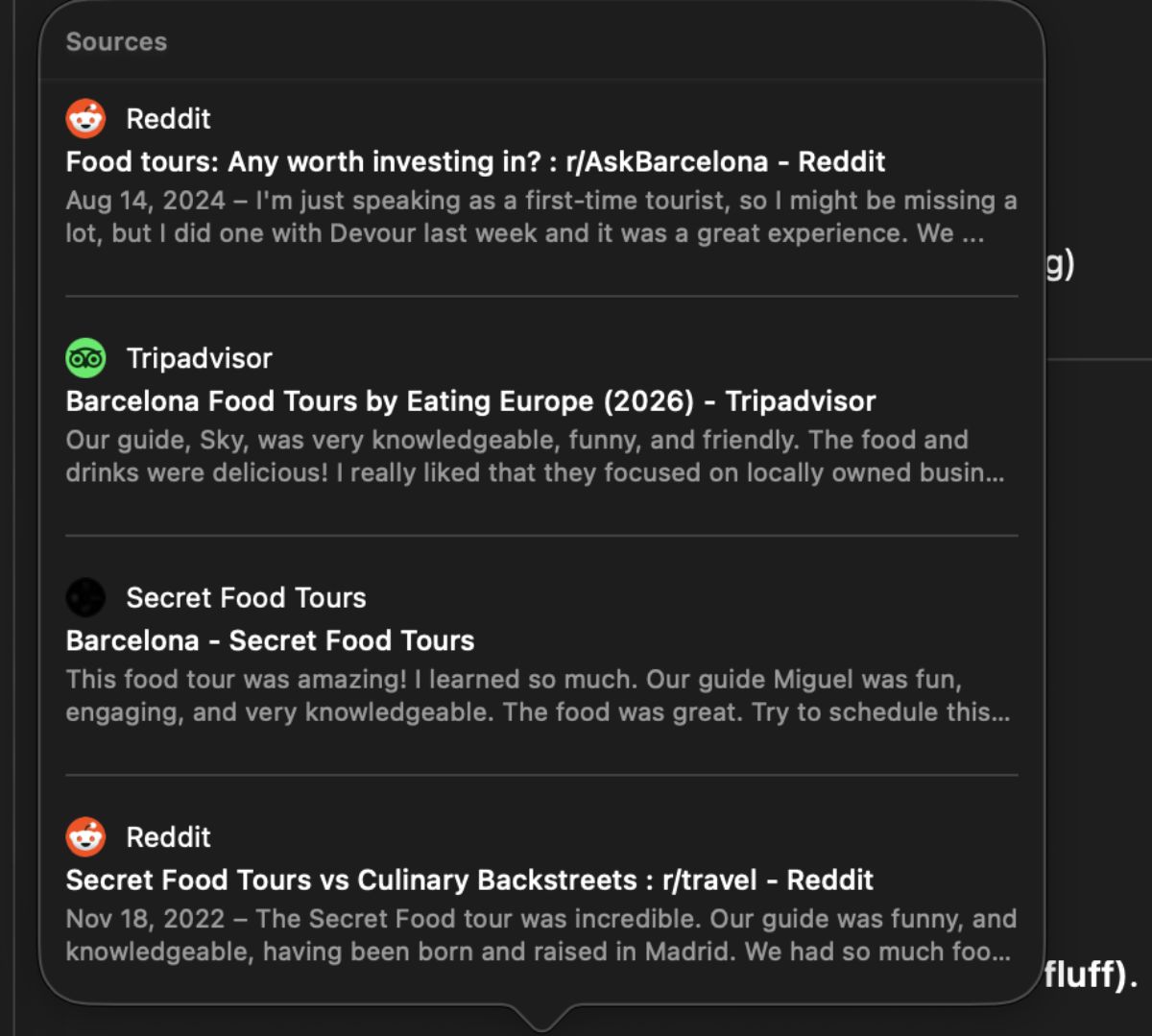
AI tools build their recommendations from whatever data they’ve been trained on — your website, review platforms, OTA listings, press mentions, Reddit threads, travel forums, and other trusted sources. If you’re not well represented across those places, the AI simply doesn’t know you exist. You can’t get recommended if you’re invisible.
Smaller, independent operators are at particular risk. Large Language Models (LLMs) favor authoritative, frequently cited sources, which gives established online travel agencies (OTAs) like Viator and GetYourGuide a significant structural advantage. Their listings are well-indexed, review-rich and referenced across thousands of websites. An independent operator with a thin web presence is, from the AI’s perspective, invisible.
Understanding Google Things to Do is worth the time here too. As a structured-data-powered surface, it represents one of the more direct signals feeding into Google’s AI systems.
Operator Action Item: Open ChatGPT, Gemini, Claude or Perplexity right now and search for your tour category in your destination: “best walking tours in [city]” or “top food experiences in [destination].” Note which operators appear, which OTAs dominate and whether you’re visible at all. That gap is your benchmark, and the rest of this article is your roadmap.
13-15 April 2027 Insider Pro Access Members Save 20% THE event of the year for the European in-destination experiences industry Save up to €850 with an Autumn Advantage Ticket as an Insider Pro Member!
GEO & AEO: the New SEO Operators Need to Know
Alongside traditional SEO, a new discipline is emerging: generative engine optimization, or GEO, along with answer engine optimization, or AEO. While SEO is about ranking in Google’s link results, GEO and AEO are about being cited, referenced and recommended in AI-generated answers.
What’s the Difference between GEO and AEO?
GEO and AEO are related but distinct disciplines, and understanding the difference helps operators prioritize.
GEO is about being cited and recommended in AI-generated responses generally. AEO, answer engine optimization, is about writing for the way AI thinks: it’s a more specific practice of structuring your content so that AI tools can extract and use it to directly answer a traveler’s question. Think of it as optimizing not for clicks or citations, but for the answer itself.
When a traveler asks ChatGPT “is the Barcelona food tour suitable for vegetarians?” the AI isn’t looking for a list of links. It’s looking for a direct, structured answer it can lift from a trusted source. If your experience page contains a clear, well-formatted FAQ section that answers that exact question, you’re a strong candidate for that answer slot. If it doesn’t, you’re not in the running, regardless of how strong your overall SEO is.
The mechanics of AEO map closely onto a format called question-and-answer markup, which uses structured data (specifically FAQ schema) to present content in the question-and-answer format that AI tools parse most easily. Clear, direct language, short answer paragraphs and genuine specificity matter far more than keyword density here.
It’s also worth noting that AEO applies beyond tour experience pages. Your booking FAQ, cancellation policy, group rates and what-to-wear guidance are all prime candidates. Any question a traveler might ask before booking is a potential answer engine target.
Why Traditional SEO Still Matters
AI tools are trained on web content and still reference trusted online sources. A strong SEO foundation, meaning well-structured pages, authoritative content and a fast-loading site, still matters because it signals credibility to the same data sources AI models draw from.
Google’s E-E-A-T framework (Experience, Expertise, Authoritativeness, Trustworthiness) has become more relevant than ever. AI tools effectively apply the same logic: they surface content from sources that appear authoritative, well-referenced and trustworthy across the web.
The difference is that ranking on Google delivers clicks; being cited by an AI delivers direct recommendations. Content like a well-developed tourism experience strategy and well-built tour description pages perform well in both contexts. They signal genuine expertise and provide the depth AI tools are looking for.
Structured Data and Schema Markup: Making Your Content AI-Readable
Structured data is code added to your website that explicitly tells search engines and AI tools what your content is about. You don’t need to write it yourself. Most modern booking and website platforms support it, but understanding why it matters is essential for AI search optimization for travel businesses.
For experience operators, the most relevant schema types are TouristTrip, LocalBusiness, Event and Review. When your site includes this data, you’re labeling your content in a format AI and search systems can parse directly, rather than inferring meaning from unstructured text. If you want to check your currency schema, I recommend visiting schema.org and navigating to the “validate” section.
Your Google Business Profile works on the same principle. It’s a structured, machine-readable record of your business that feeds directly into Google’s AI systems. Keeping it complete, accurate and regularly updated is non-negotiable. Tools like Google’s Rich Results Test let you audit your current structured data without a developer. Most major booking platforms, including Fareharbor, Bokun and Rezdy, generate schema automatically, though operators should verify it’s working correctly.
Content That AI Tools Actually Cite
AI tools cite content that demonstrates genuine depth: comprehensive destination guides, detailed FAQ pages, authoritative “best of” roundups and review-rich listings. Thin, generic content is effectively invisible. A 200-word experience description that reads like a brochure won’t cut it.
For a tour operator, depth looks like this: a page about your food tour that explains the neighborhoods visited, typical logistics, dietary options, what happens in bad weather and includes dozens of substantive reviews. That page signals authority. A page that says “join us for a delicious culinary adventure” does not.
Rory Gillett, SEO specialist and founder of Parlez Creative, sees this shift playing out directly in how operators need to think about content. “The operators who win are the ones who clearly own a niche and demonstrate real expertise,” he says. “Trying to be everything to everyone makes you invisible in AI search.”
Gillett points to a fundamental change in how travelers search. Rather than broad queries like “African safari,” travelers are now asking AI for a “luxury safari for empty nesters celebrating an anniversary.” That specificity favors smaller, niche operators who build experience-led content around genuine traveler scenarios, not the high-volume generic terms where large OTAs dominate.
His second point is equally important for operators: top-of-funnel informational content, best time to visit, safety tips, itinerary ideas, is exactly what AI answers directly. “You have to be the source of the data to stay in the game,” he says. Operators who provide the local, on-the-ground knowledge AI models draw on will stay visible at the very start of the traveler’s journey. Those who don’t risk being invisible before the conversation even begins.
Third-party mentions accelerate this further. Press coverage, features in your local DMO (destination marketing organization), OTA listings with consistent, recent reviews, local tourism directory entries and organic recommendations in Reddit threads and travel forums all constitute the external references AI tools use to validate credibility.
Operator Action Item: Audit your top three experience pages. Ask yourself: does this page actually answer the questions a traveler would type into an AI assistant before booking? If not, rewrite them. Add specific logistics, honest context, pricing information and a genuine FAQ section. Write out the five or six most common pre-booking questions for each experience: things like “what’s included,” “how long does it take” and “is it suitable for children” and make sure your pages answer them clearly and directly.
Review Platforms, OTAs and Third-Party Presence
AI search doesn’t just crawl your website. It synthesizes information from across the web. Your presence on review platforms, OTA listings, third-party sites and community platforms like Reddit and travel forums may matter just as much as your own content, because those sources carry the kind of authority AI systems trust.
Why Your Tripadvisor and Google Profiles Matter More Than Ever
AI tools treat review platforms as trusted, relatively neutral third-party sources. Tripadvisor, Google Reviews and similar platforms provide independently verified signals that help an AI feel confident making a recommendation. An operator with 200 recent reviews across multiple platforms has materially stronger AI visibility than one with 15 reviews from three years ago.
Recency matters. An AI recommending experiences in 2026 is looking for signals of current, active quality. A business that hasn’t received a new review in 18 months sends the wrong signal, not just to potential customers but to the AI systems deciding what to recommend.
Response rate also functions as a trust signal. Responding to reviews, including negative ones, indicates an active and professional operation. This is now part of your AI visibility strategy, not just reputation management.
The OTA Opportunity (and the Direct Booking Tension)
Many operators who have worked hard on growing direct bookings feel ambivalent about OTAs. In the context of AI-powered discovery, those listings deserve a fresh look.
Viator and GetYourGuide are already appearing prominently in AI-generated recommendations. Their pages are authoritative, heavily reviewed and well-indexed. For an operator, maintaining strong, complete and review-rich OTA listings isn’t just a distribution decision. It’s a deliberate AI visibility tactic.
The tension with direct bookings isn’t necessarily a contradiction. Travelers who discover you through AI via an OTA listing can become repeat direct bookers. The first booking may come through Viator; the relationship that follows is yours to build.
Operator Takeaway: Treat your OTA listings as AI visibility assets, not just booking channels. Ensure every listing has complete descriptions, high-quality photos, accurate pricing and current availability. Then request reviews actively and systematically after every tour, directing guests to both Google and Tripadvisor. More reviews on authoritative platforms equals a stronger signal to AI tools recommending experiences in your market.
Join us at an upcoming Arival event to connect, learn, & grow your tours, activities, & attractions business
Practical Steps to Improve Your AI Search Visibility Today
The operators who will fare best in AI-powered discovery are the ones who start building visibility now, while most competitors are still deciding whether it matters. It does.
Audit Your Current AI Presence
Start with a baseline. Search for your experience category in ChatGPT, Claude, Perplexity and Google AI Overviews using natural-language queries: “best kayak tours in [city],” “top cooking classes in [destination],” “most authentic wine experiences in [region].” Note which operators are named, which OTAs dominate, what platforms are cited as sources and what phrasing triggers your category. This tells you where the gaps are and which platforms to prioritize.
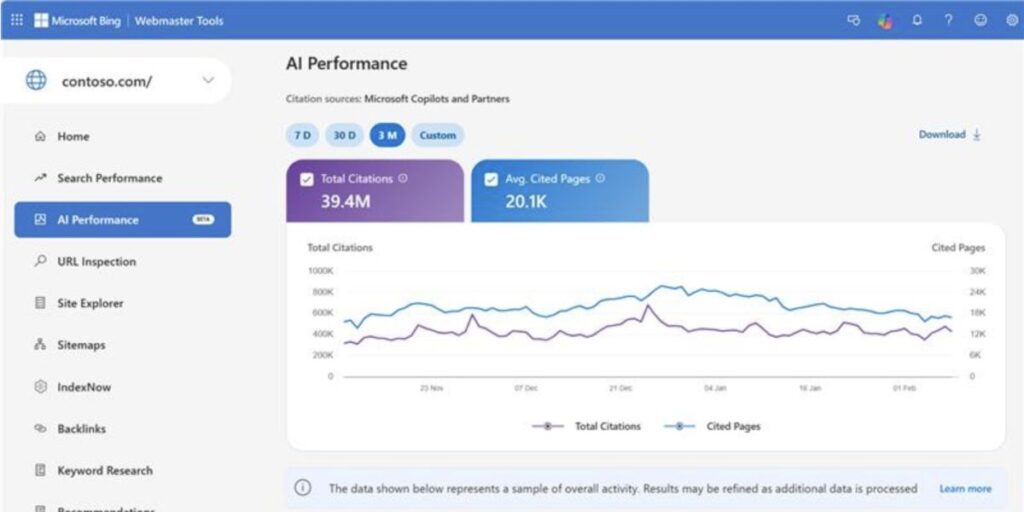
To track your AI visibility more systematically, tools are beginning to emerge that measure how your content is cited in AI-generated answers. Microsoft Clarity’s AI Citations dashboard is a free way to check in on citation activity across supported AI models, showing which queries trigger citations of your domain, your citation rate, and which specific pages are being referenced. This kind of data moves you beyond manual spot-checks and into ongoing, measurable AI visibility tracking.
Quick Wins for Operators of Any Size
- Complete and optimize your Google Business Profile: every field, every category, regular photo updates, Q&A responses. For most operators, this is the highest-leverage action available.
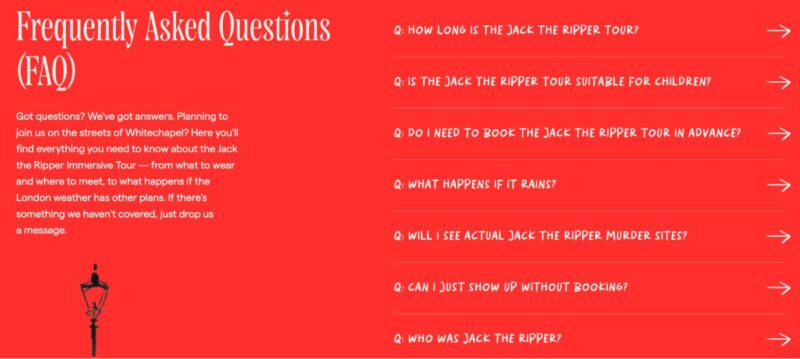
- Add FAQ sections to your key experience pages answering the specific questions travelers actually ask: How long does it take? What’s included? Can children join? What’s the cancellation policy? These question-and-answer formats are exactly what AI tools draw on when synthesizing recommendations.

- Verify you’re listed on the platforms AI tools trust: Viator, GetYourGuide, Tripadvisor and Google Things to Do, for starters. Search Reddit and travel forums for your destination and experience category to see what travelers are recommending and where gaps exist. If you’re already listed, check that the information is complete and current.
- Create one authoritative guide piece for each of your destinations or experience categories, a genuine resource rather than a blog post.
- Request reviews systematically after every tour as part of your post-booking follow-up.
Longer-Term Strategy: Building Authority That AI Recognizes
Sustainable AI visibility is earned through consistent mentions across trusted sources over time. Press coverage from travel media, features by local tourism boards and listings on destination authority sites and genuine recommendations in Reddit threads and niche travel forums all contribute to the reference network AI tools use to assess credibility.
Partnering with local businesses, DMOs and complementary experience providers creates mutual citation opportunities that compound over time. A food tour mentioned on a local culinary site, referenced by the city tourism board, then indexed by a travel publication: that network is what positions you for AI recommendation at scale.
For operators building their digital presence from the ground up, the foundational principles in our guide on how to start a tour company apply directly: authority built early compounds, and AI visibility is no exception.
Operator Action Item: Pick one action from this section and complete it this week. Then set a quarterly reminder to run your AI search audit, the same way you’d monitor your Google rankings. Getting found in AI-powered search for tourism requires ongoing attention, not a one-time fix.
Navigating the Future: What Operators Should Watch in 2026 and Beyond
The current moment in AI search is early. The tools travelers use will continue to evolve, and so will the ways AI intersects with the booking journey.
The most significant near-term shift is agentic AI: the move from AI answering questions to AI completing tasks. Rather than telling a traveler “here are three food tours in Barcelona,” an agentic AI will identify, evaluate and book the tour on their behalf. This changes the stakes considerably. Your booking infrastructure, availability data and API connections to major platforms become part of your AI visibility strategy, not just your technology stack.
Voice search is also growing as AI assistants become more capable. Travelers asking Siri, Google Assistant or Alexa for experience recommendations are triggering the same AI systems and quality signals as text-based queries. Operators with conversational, natural-language content will be better positioned.
What doesn’t change is the foundation. Great products, strong reviews, authoritative content and active engagement with trusted platforms will always matter, because they represent genuine credibility regardless of how the technology evolves. AI discovery for travel experiences rewards the same fundamentals that good digital marketing always has.
Operator Takeaway: Watch how your preferred OTA partners respond to agentic AI integrations. Platforms that connect to AI booking agents early will carry operator inventory with them. Staying current with your OTA’s product updates and API capabilities should now be part of your broader AI search for travel strategy.
18-21 October 2027 Insider Pro Access Members Save 20% The global gathering for the people who create, sell and shape travel experiences.
Getting Found in the Age of AI: Key Takeaways for Operators
The shift to AI-powered discovery is real, fast and already affecting which tour operators get found and which don’t.
The good news is, the path to AI visibility runs through things you should already be doing: collecting reviews consistently, maintaining complete platform listings, creating content that genuinely helps travelers and keeping your web presence active and authoritative. GEO isn’t a replacement for good digital marketing. It’s the layer that makes everything you’ve already invested in work harder.
Start with your audit this week. Open ChatGPT, search for your experience category in your destination and see what comes back. That benchmark will tell you everything about where to focus. The operators who move early in AI-powered search will have a real competitive advantage: as travelers increasingly rely on AI for trip planning, it’s all about meeting travelers where they are.
About the Author

Oliver Green is an Arival Insights Contributor and regular speaker at Arival events. As a travel and tourism consultant and operator, he specializes in automation, AI, and scalable systems for tour companies. He helps operators increase direct revenue, reduce operational overhead and modernize their tech stack.
Take Your AI Skills to the Next Level
Learn more about the latest insights in AI for tour, activity and attraction operators at an upcoming Arival event, where Oliver Green and other industry experts will be leading sessions and workshops on a variety of topics to help operators of tours, activities and attractions level up their AI knowledge, skills and strategy.
Become an Insider Pro Access member today and get access to the full library of Arival research, plus many other benefits such as free consulting sessions, special discounts and 20% off in-person events, starting from $179 per year.
Sign up to receive insights tailored for the in-destination industry as well as updates on Arival.
Header Image: Generated With Canva AI