


Two out of every three U.S. consumers now watch travel videos on YouTube as part of their trip-planning process. The platform’s travel category is exploding, with 3.7 million travel channels and 593 billion views in the first half of 2025 alone (source).
That is not a niche audience. It is a massive, intent-rich pool of potential customers watching destination guides, reading reviews and searching for experiences exactly like the ones you sell. Yet most small and mid-size tour operators treat YouTube as an afterthought, posting the occasional highlight reel before moving on to the next Instagram story.
That is a missed opportunity. Unlike social platforms where content peaks within hours and then vanishes from feeds, YouTube videos compound in value over time. A well-optimized tour video uploaded today can still drive bookings two or three years from now. For operators looking to build sustainable, long-term visibility without constantly feeding the algorithm, YouTube deserves a serious place in your marketing strategy.
This article breaks down six practical ways to maximize YouTube for your tour business: repurposing the short-form content you are already creating, mastering YouTube SEO, getting your thumbnails right, using playlists and end screens to keep viewers watching, treating the platform as a long-term brand investment and setting up the tracking you need to prove it is working.
1. Turn Your Reels and TikToks Into YouTube Shorts
If you are already creating short-form video for Instagram Reels or TikTok, you are sitting on a library of content that can work just as hard on YouTube Shorts. This is the most cost-effective way to expand your visibility across platforms without adding to your workload. The filming, the editing, the captions: you have already done the creative work. Uploading it to YouTube Shorts is essentially free distribution.
YouTube Shorts now generates 200 billion daily views and reaches 2 billion logged-in users every month. The format leads all three short-form platforms in average engagement rate at 5.91 percent, and 82 percent of consumers report that watching a video has directly influenced a purchase decision. Your 30-second clip of a sunset kayak tour or a street food market walkthrough is not just content. It is a sales tool on three platforms instead of one.
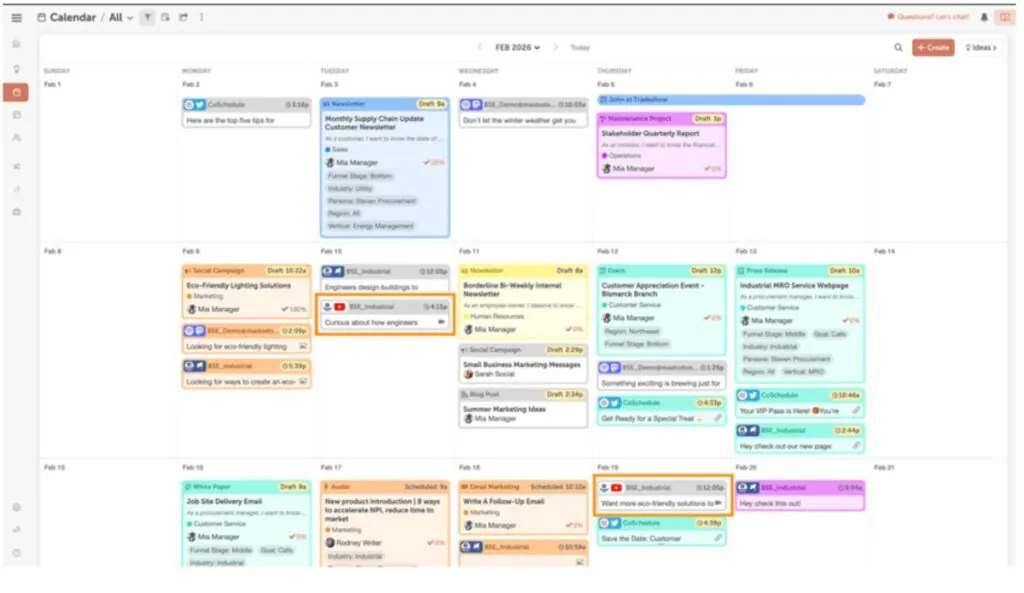
Tip: Use a scheduling tool to upload natively to YouTube Shorts for the best reach
One important technical detail: all three platforms use visual analysis to detect watermarks from competing services. A TikTok-watermarked video uploaded to YouTube Shorts will receive reduced distribution, for example. Always export clean, unwatermarked versions before cross-posting. If you use CapCut, InShot or a similar tool, export the file to your camera roll first and then upload natively to each platform.
A cross-platform scheduling tool can make this even easier. Queue up your clean exports in one session, schedule them across all three platforms, and move on with your day.
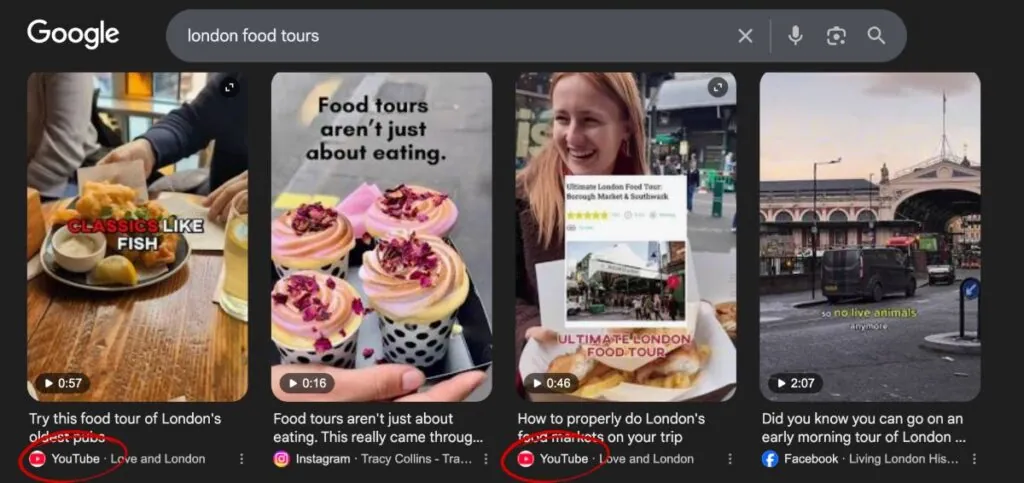
There is another reason YouTube Shorts deserves priority in your cross-posting workflow. Since mid-2025, Google has rolled out a “Short Videos” filter in its search results on both mobile and desktop. When a traveler searches for something like “best street food Bangkok” on Google, they can now tap the Short Videos tab and see a curated feed of vertical clips pulled directly from YouTube Shorts, TikTok and Instagram Reels.
This means your Shorts are not just discoverable within YouTube. They can appear in Google search results too, giving you an additional layer of search distribution that TikTok and Instagram alone cannot match. For tour operators already investing in SEO, this is a natural extension: your short-form video content now has the potential to rank alongside your website.
The recommended posting sequence is:
- TikTok first for its organic reach potential,
- YouTube Shorts next for search discovery,
- Instagram Reels third for relationship-driven distribution.
But the key insight for operators is simple: you do not need three separate content strategies. One shoot, three platforms, triple the exposure, and now an additional presence in Google search results.
Operator Action Tip: Export every Reel and TikTok as a clean, unwatermarked file and upload it to YouTube Shorts the same week. Set up a simple spreadsheet to track which clips you have cross-posted so nothing falls through the cracks. If you publish two short-form videos per week, this single habit gives you six platform placements instead of two, with zero additional production cost.
12-15 Oct 2026 Insider Pro Access Members Save 20% THE event of the year for creators and sellers of destination experiences to connect, learn & grow. It’s Your Last Call to Save! Get Your Ticket Today!
2. Master YouTube SEO to Get Found by Travelers
Here is where YouTube fundamentally differs from TikTok and Instagram: it is a search engine. YouTube is the world’s second-largest search engine after Google, and 85 percent of travel-related searches on the platform involve general destination and activity queries. Travelers are typing in phrases like “best food tours in Tokyo” or “what to do in Rome for a day.” If your content is optimized for those terms, it can surface for months or even years after upload.
On TikTok, a video typically peaks within 48 to 72 hours and then drops off sharply. YouTube long-form content works differently. Videos between five and 10 minutes hold viewers best, with 31.5 percent average retention, and YouTube’s recommendation engine promotes videos with strong retention past the 60-second mark up to 50 percent more frequently. A well-titled video about your signature tour can generate steady organic traffic long after publication.
Tips to optimize your posts to get the most out of YouTube search
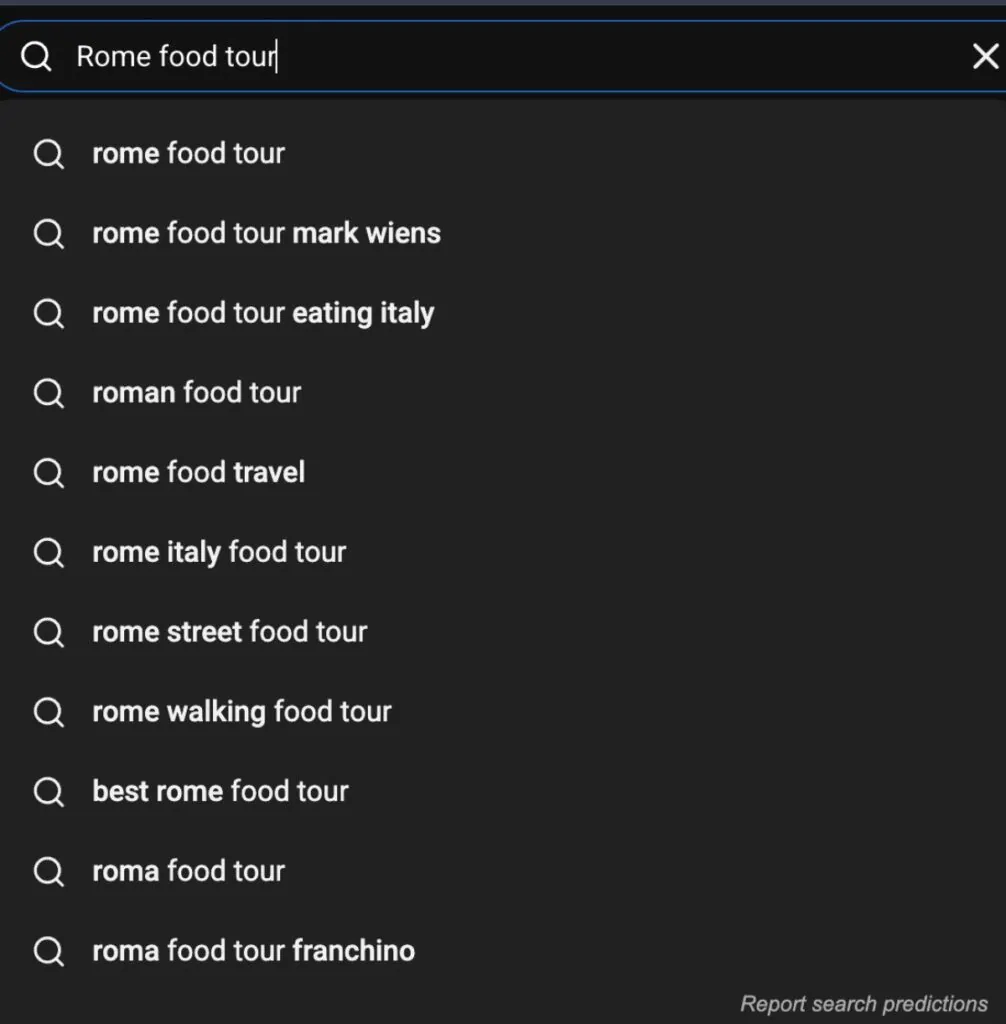
Start with keyword research. Tools like TubeBuddy, VidIQ or YouTube’s own search suggest feature will show you what travelers are searching for. Type the beginning of a phrase related to your tours into the YouTube search bar and see what autocomplete suggestions appear. Those are real searches from real people. A title like “Lisbon Food Tour: 7 Dishes You Have to Try” is far more discoverable than “Our Amazing Lisbon Experience.”
Write descriptions of at least 200 words that include your target keywords, a summary of the video, links to your booking page and relevant timestamps. Use a mix of broad terms like “food tour” and specific long-tail phrases like “Lisbon food tour with locals.” And do not overlook closed captions: YouTube indexes caption text for search, so accurate captions improve discoverability while making your content accessible to non-native English speakers.
There is a newer reason to take YouTube SEO seriously. YouTube citations in Google’s AI Overviews surged more than 25 percent in 2025, and YouTube has launched its own AI-powered search carousel that specifically highlights travel-related queries. Search for something like “best beaches in Hawaii” or “things to do in Rome” and you will see an AI-generated carousel pulling clips directly from YouTube videos, complete with summaries and thumbnails. This means well-optimized YouTube content is no longer just ranking in traditional search. It is being surfaced and recommended by AI, giving your videos yet another distribution channel you do not have to pay for.
Operator Action Tip: Spend 15 minutes on keyword research before titling any video. Use YouTube’s search suggest bar to find the phrases travelers actually search, and build your titles around them. Write descriptions of at least 200 words with keywords, booking links and timestamps. With YouTube content now surfacing in Google AI Overviews, the SEO investment you make today has more distribution upside than ever.
3. Your Thumbnail Is Your Storefront
You can have the best YouTube SEO in the world, but if your thumbnail does not make someone want to click, none of it matters. Think of it as the storefront window of your tour: it needs to stop people in their tracks and make them curious enough to step inside.
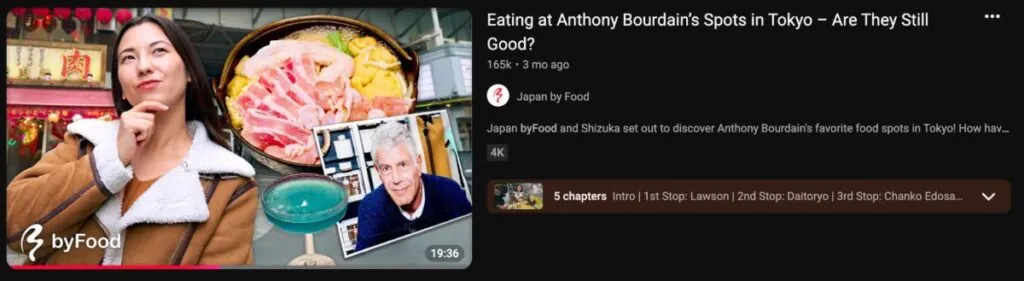
The average YouTube click-through rate sits between 4 and 6 percent. Top-performing channels push above 8 percent. That is double the traffic from the same impressions, with zero additional spend. Research from Hootsuite found that videos with human faces in thumbnails receive 45 percent higher click-through rates than those without.
For tour operators, this is a natural advantage: your guides, your guests and the people who bring your experiences to life are your best thumbnail assets. A close-up of a guide holding up a dish at a market stall will outperform a wide-angle landscape shot every time. Keep any overlay text on the thumbnail to four words or fewer, use bold contrasting colors and make sure the image reads clearly on a mobile screen.
YouTube also rolled out a free A/B thumbnail testing tool in late 2025, and creators who use it are seeing an average 20 percent lift in click-through rate (CTR). Upload two thumbnail options for the same video, let YouTube test them against each other, and let the data decide. Over time, this teaches you what your audience responds to and removes the guesswork from one of the most important decisions you make for every upload.
Operator Action Tip: For every video, create a thumbnail that features a human face with a clear expression, no more than four words of overlay text on the image, and bold contrasting colors. Use YouTube’s free A/B testing tool to test two thumbnail options for each upload and let the data tell you which style your audience prefers. A 20 percent CTR improvement means 20 percent more viewers from the same content.
4. Use Playlists and End Screens to Keep Viewers Watching
Strategic use of playlists and end screens can meaningfully extend session time. TubeBuddy’s testing found viewers who click an end screen watch for an average of 3:32, more than double the typical view duration, and a 2026 DataGlobeHub analysis reported that playlist links in end screens add roughly 3.2 extra minutes of watch time per session.
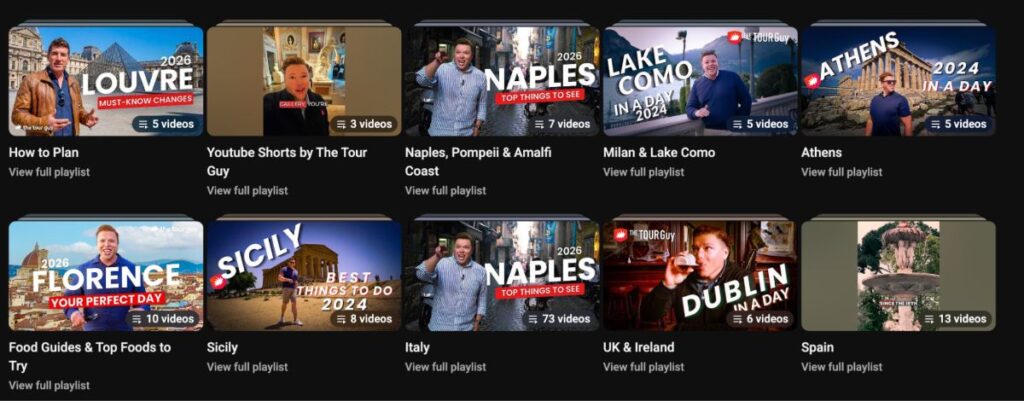
Playlists are underused by most tour operators, but they are one of the simplest tools available. Group your videos by destination, experience type or theme. A “Rome Tours” playlist or a “Street Food Around the World” playlist gives viewers a natural path to keep watching. YouTube even offers Series Playlists that tell the algorithm videos are meant to be watched in a specific order, perfect for a multi-part destination series.
End screens are equally important but require a lighter touch. These clickable elements appear in the final 20 seconds and can point viewers to another video, a playlist or a subscribe button. Include no more than two or three elements and keep the layout clean. Pair them with a verbal call to action: a simple “If you are planning a trip to Lisbon, watch this video next” is far more effective than a silent end card.
Operator Action Tip: Create playlists organized by destination or experience type and add every relevant video. Use end screens on every upload to point viewers to a related video or playlist, and include a verbal call to action in the last 20 seconds. This costs nothing to implement and can increase your channel’s session time by 10 to 30 percent, which directly improves how often YouTube recommends your content.
Join us at an upcoming Arival event to connect, learn, & grow your tours, activities, & attractions business
5. Think of YouTube Like SEO, Not Social Media
Let us be direct about expectations: YouTube takes time. Unlike a paid social campaign that delivers clicks within hours, YouTube is a compounding asset that builds value gradually. Production costs for quality long-form content add up, and you may spend several months uploading consistently before you see meaningful traction.
But this is precisely why it is so valuable. Roughly two-thirds of U.S. consumers watch travel videos as part of their trip-planning process, according to Think with Google’s travel video view statistics, and a recent Expedia study found that 71 percent of travelers say video shapes their booking choices, compared with just 24 percent for static images. When a potential customer watches your eight-minute video walking through your morning market tour in Bangkok, they are forming a relationship with your brand in a way that a 15-second Reel cannot replicate.
The right mental model is SEO, not social media. Just as you would not expect a blog post to rank on Google overnight, you should not expect a YouTube video to deliver bookings in week one. But the compounding returns are significant. Travel content on YouTube grew 64 percent quarter over quarter from Q1 to Q2 2025, drawing 593 billion views across 3.7 million travel channels in the first half of the year, meaning the audience for your category is growing even as you build your library.
From a budgeting perspective, treat YouTube as a line item alongside your SEO and content marketing spend, not your social media budget. Two well-produced videos per month will outperform 10 rushed ones over a 12-month horizon.
Tips for ramping up your YouTube content production on a limited budget
If professional production is beyond your budget, start with a smartphone, a clip-on microphone and natural lighting. In the tours and activities space, authenticity sells.
AI tools like Claude or ChatGPT can also take the heavy lifting out of post-production. Use them to generate keyword-rich titles, write optimized video descriptions, draft closed captions or brainstorm content ideas based on what travelers are searching for. This does not replace knowing your audience, but it does mean a solo operator can produce SEO-ready uploads without hiring a copywriter or spending an hour agonising over a 200-word description.
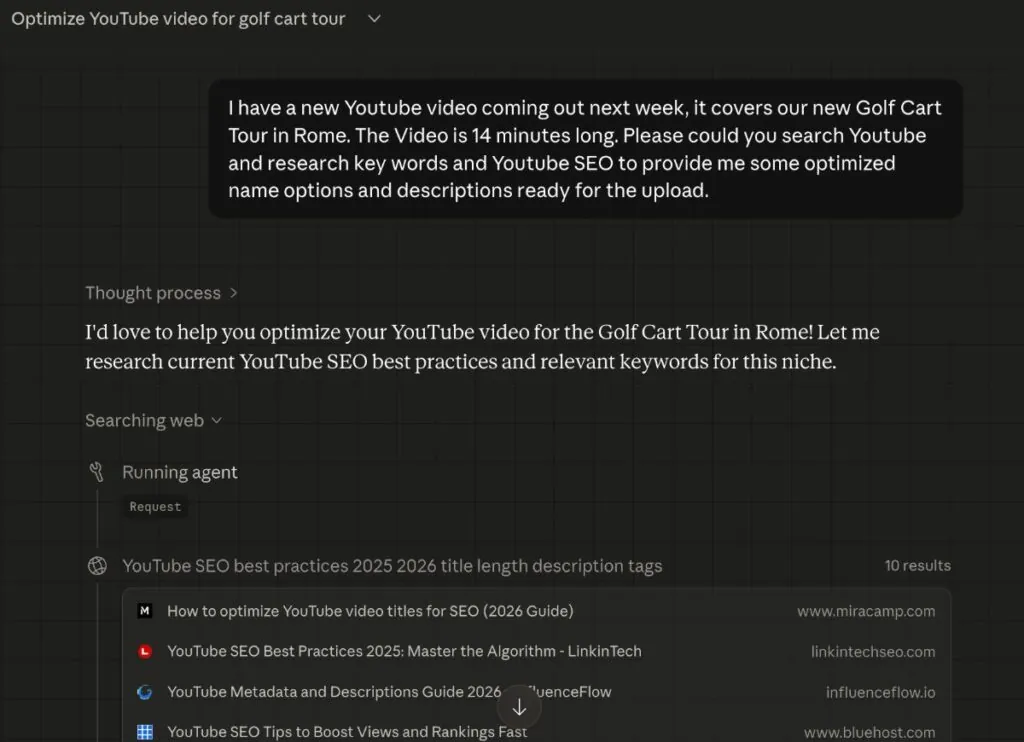
Claude Cowork’s output based on the prompt shared above.
Operator Action Tip: Budget for YouTube the way you budget for SEO: as a long-term brand investment with a 6- to 12-month horizon before expecting meaningful returns. Aim for two quality uploads per month rather than sporadic bursts.
6. Set Up Tracking From Day One
One of the most common mistakes operators make with YouTube is failing to set up proper attribution before they start publishing. If you cannot measure the traffic and bookings YouTube drives, you will never be able to justify the investment. Starting to measure six months in means losing six months of baseline data you can never get back.
Track your channel’s growth in 90-day windows, not weekly, and evaluate it against the lifetime value of the bookings it generates rather than the immediate cost per view.
Tips to set up tracking to measure your impact
Start with Google Analytics 4. Use UTM-tagged links in every video description with a simple structure: source as “youtube,” medium as “video” and campaign as the video topic. A link in your Lisbon food tour video might look like:
yoursite.com/?utm_source=youtube&utm_medium=video&utm_campaign=lisbon-food-tour
This lets you trace every visit and conversion back to the specific video that drove it.
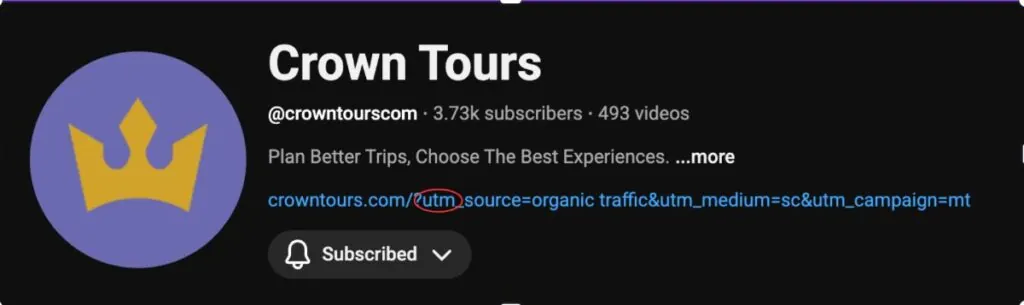
YouTube Studio’s built-in analytics tell you about video performance, but not business performance. The metrics that matter most for operators are click-through rate from descriptions to your website, time-on-site for YouTube-referred visitors compared to other channels and conversion rate. If YouTube visitors spend 40 percent more time on your site than Instagram visitors, that tells you something important about purchase intent.
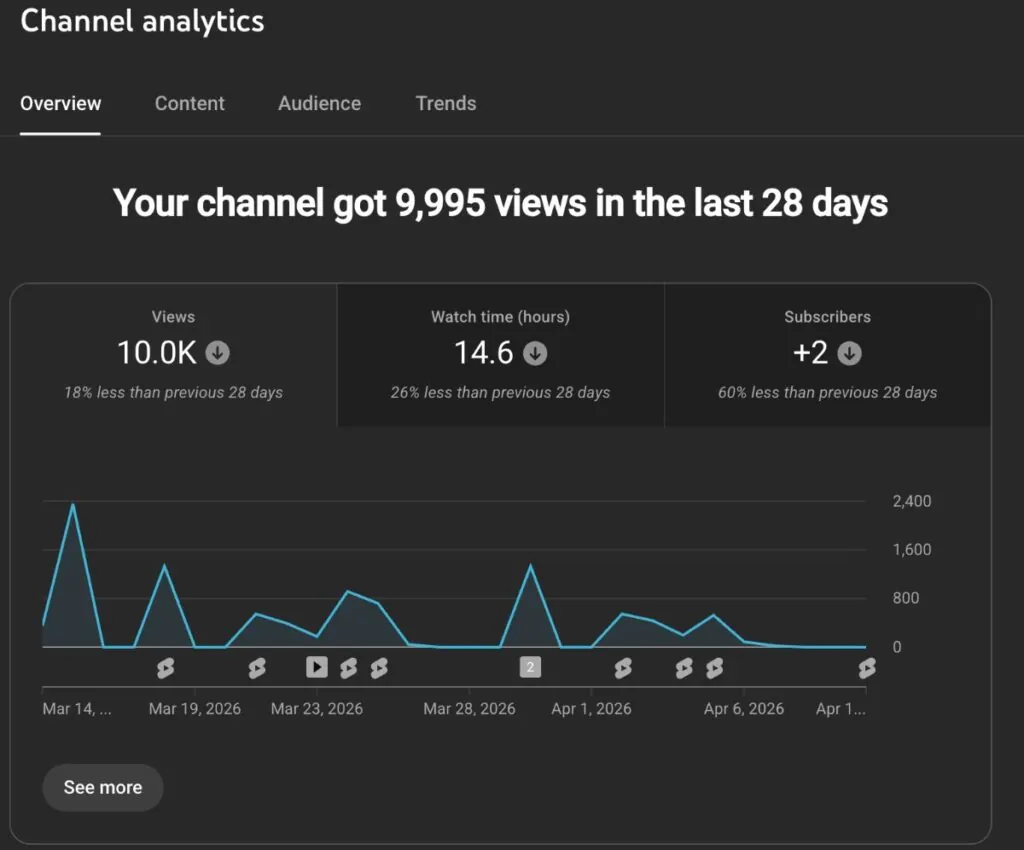
Set up a simple monthly reporting cadence. Track YouTube-referred sessions, pages per session, session duration and goal completions or e-commerce transactions. Build this as a GA4 exploration report filtered by source. Over time, this data shows you which videos drive the most valuable traffic, so you can make more of what works.
Operator Action Tip: Before uploading your first video, configure GA4 to track YouTube as a traffic source and create a UTM template for all video description links. Set source as “youtube,” medium as “video” and campaign as the video topic. Review this data monthly in a simple GA4 report. Without tracking from day one, you are flying blind on the one metric that justifies your YouTube budget: actual bookings.
The Bottom Line: YouTube is a Long Term Strategy
YouTube is not a quick win, and it is not free. But for small and mid-size tour operators willing to think beyond the next 30 days, it offers something no other platform can match: compounding, search-driven visibility that builds your brand while you sleep. The operators who start now, even modestly, with repurposed Shorts, keyword-optimized titles and proper tracking, will be the ones reaping the rewards two years from now when their competitors are still wondering whether YouTube is worth the effort.
The travel content audience on YouTube is growing. The tools for cross-platform distribution have never been more accessible. And the gap between operators who use YouTube strategically and those who ignore it is only going to widen.
Channels Worth Studying
For examples of tour operators doing YouTube well, check out
- byFood (Japan by Food) for personality-driven food content that connects directly to bookings.
- The Tour Guy for SEO-optimized destination guides that rank for high-intent searches.
- Devour Tours for high quality video focused on food search and destination search including behind the scenes videos.
About the Author

Oliver Green is an Arival Insights Contributor and regular speaker at Arival events. As a travel and tourism consultant and operator, he specializes in automation, AI, and scalable systems for tour companies. He helps operators increase direct revenue, reduce operational overhead and modernize their tech stack.
Learn More with Arival
Get the full Arival experience by joining us at an upcoming Arival event, and hear the latest research insights and tips on digital marketing for the experiences sector directly from tours, activities and attractions industry leaders and experts, including Oliver Green!
Become an Insider Pro Access member today and get access to the full library of Arival research, plus many other benefits such as free consulting sessions, special discounts and 20% off in-person events, starting from $179 per year.
Sign up to receive insights tailored for the in-destination industry as well as updates on Arival.