


The travel industry has been buzzing about self-guided tours for several years. Arival has identified dozens of self-guided tour platforms, new startups continue to enter the market and AI only accelerates entrepreneur interest in the category.
But while self-guided tech continues to evolve, where travelers are actually using self-guided experiences is perhaps more interesting — and somewhat unexpected.
For traditional self-guided walking tours, demand has been fairly stable. Just 13% of U.S. and European travelers report taking a self-guided tour via a mobile app in the past year, according to Arival’s forthcoming The 2026 Day Tour Taker. That 13% figure has changed little since Arival first began tracking it among U.S. and European travelers.
At attractions, however, the story is very different.
Self-Guided Tech Use Highest in Attractions
More than one-third of U.S. travelers (36%) and nearly three in 10 European travelers (29%) used a self-guided tour or mobile audio guide while visiting an attraction. In other words, travelers are roughly three times more likely to use self-guided technology inside an attraction than for a standalone self-guided walking tour.
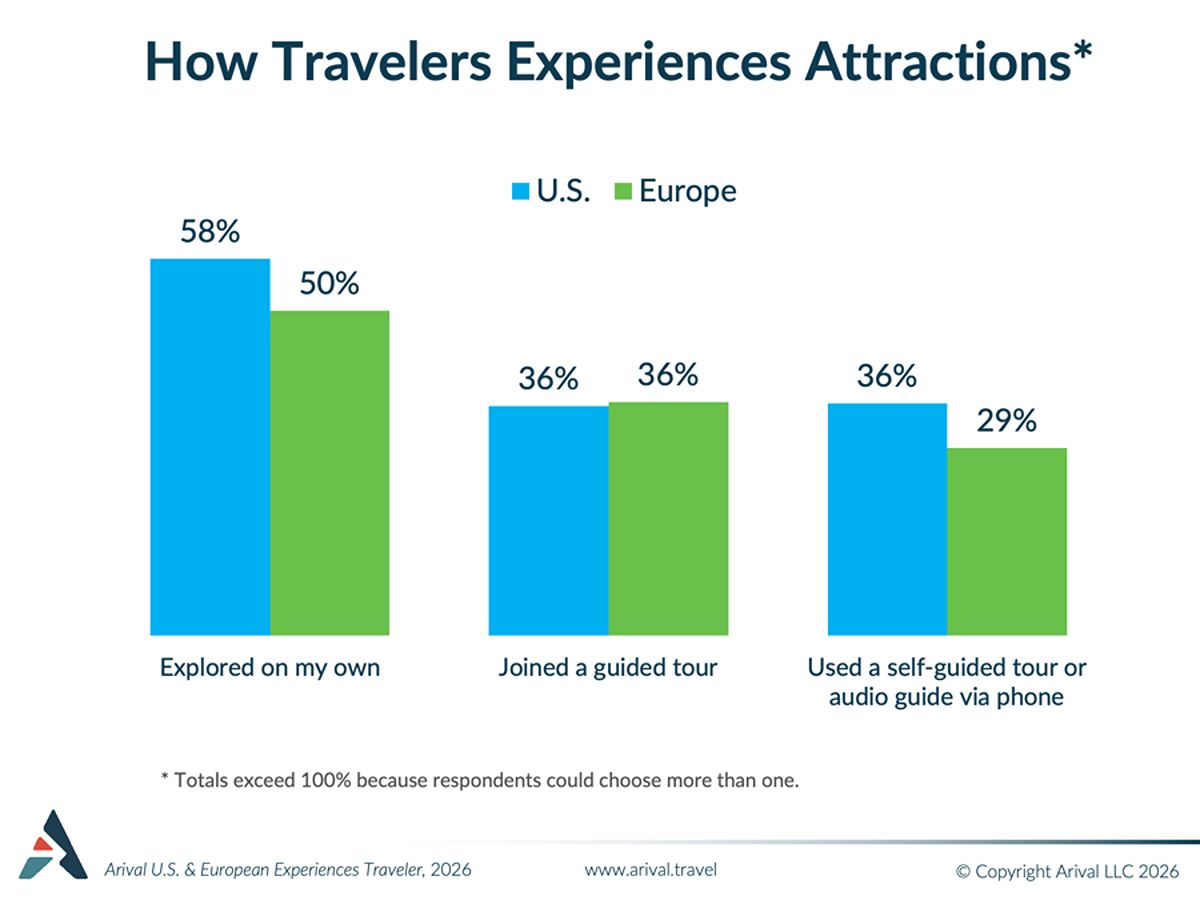
This behavior is consistent across markets. Usage is somewhat higher among U.S. travelers and lower in Spain, but across most of Europe roughly three in 10 attraction visitors use a mobile guide.
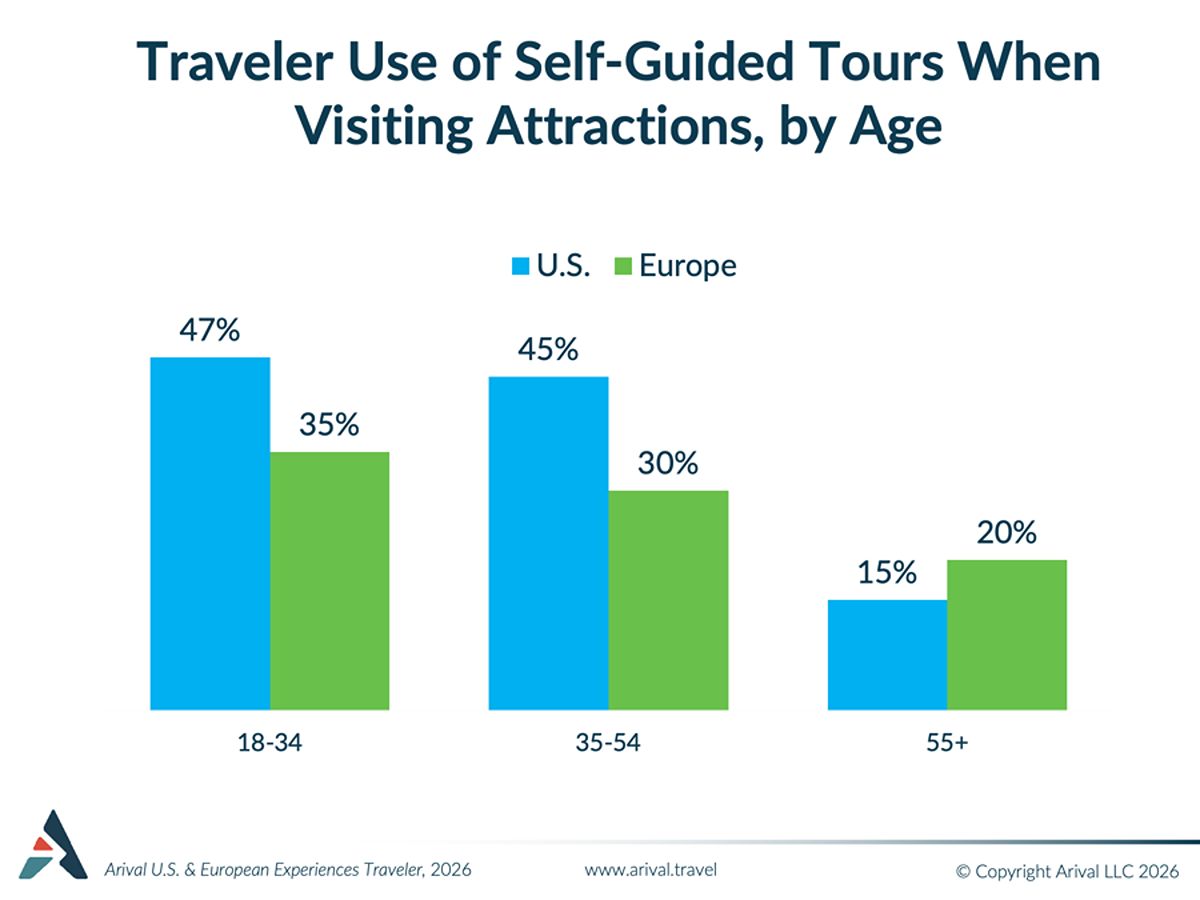
The biggest differences aren’t geographic; they’re demographic. Younger travelers and higher-income travelers are significantly more likely to use self-guided experiences. These are also the travelers who are most comfortable using technology throughout the travel journey, from trip planning and booking to experiencing a destination.
12-15 Oct 2026 Insider Pro Access Members Save 20% THE event of the year for creators and sellers of destination experiences to connect, learn & grow. Don’t Miss Out! Get Your Ticket Today!
It’s Not Self-Guided vs. Guided
Self-guided experiences are not replacing guided tours. Far from it. Guided tours remain tremendously popular, with more than four in five U.S. and European travelers taking a guided tour in the past year.
Rather, self-guided technology appears to be emerging as a complementary way for travelers to experience attractions. For attractions, this represents a significant opportunity to enhance the visitor experience, generate additional revenue through premium audio content, support multilingual visitors, and serve guests who prefer to explore at their own pace.
Ultimately, the data suggests that the attraction—not the tour—is becoming the primary use case for self-guided experiences. That’s where traveler demand is today, and where the greatest commercial opportunity appears to be.
What This Means for You
1. The biggest opportunity isn’t replacing guided tours – it’s enhancing attractions.
Travelers are far more likely to use self-guided technology while visiting attractions than for standalone walking tours. For attractions, self-guided experiences can improve the visitor experience, increase accessibility, and create new premium and ancillary revenue opportunities.
2. Be disciplined about investment in standalone self-guided tours.
Consumer demand for self-guided walking tours has remained steady at a low double digit share of travelers. That doesn’t mean there isn’t a market, but operators should calibrate investment accordingly and validate demand before making major technology or content investments.
3. Know your customer.
Younger and more affluent travelers are significantly more likely to embrace self-guided experiences. If those travelers represent a core customer segment, investing in self-guided products may deliver greater returns than for operators serving older or more traditional audiences.
4. Think of self-guided as another product, not a replacement.
For many operators and attractions, self-guided experiences can complement guided tours by serving travelers seeking a lower price point, greater flexibility, different languages, or the ability to explore at their own pace.
5. OTAs and resellers have an opportunity.
Self-guided products represent an attractive way to broaden inventory, particularly for attractions. They provide a lower-priced offering that can appeal to younger, digitally savvy travelers while expanding the range of bookable experiences available through marketplace channels.
Learn more about the self-guided tour and mobile audio experience landscape with our free Arival Guide to Self-guided Tours & Audio Experiences.
What’s Next? Dig Deeper with Arival
Learn more in our forthcoming report on The 2026 Day Tour Taker, and by joining us at the next Arival event to get the latest insights directly from the top leaders in the experiences industry on the latest trends, research findings, technology, distribution and digital marketing strategies for day tours, activities, attractions and multi-day travel.
Become an Insider Pro Access member today and get access to the full library of Arival research, plus many other benefits such as free consulting sessions, special discounts and 20% off in-person events, starting from $179 per year.
Sign up to receive insights tailored for the in-destination industry as well as updates on Arival.