


Dynamic pricing has transformed airlines, hotels, ridesharing and countless other industries. Travel experiences have largely been the exception.
Most tour, activity and attraction operators still rely on fixed pricing, charging the same price regardless of demand, seasonality or booking conditions. But that is changing.
According to Arival’s State of Experiences in Australia & New Zealand, nearly one in four operators in Australia and New Zealand (ANZ) now use some form of variable or dynamic pricing, more than double the share reported just two years ago.

Variable – not Dynamic – Pricing Is Driving the Shift
Most of this growth is being driven by variable pricing, not true dynamic pricing.
Variable pricing means charging different prices based on factors such as season, day of week, departure time, or other predefined rules. Dynamic pricing goes further, automatically adjusting prices based on demand, occupancy, booking pace, and other market signals.
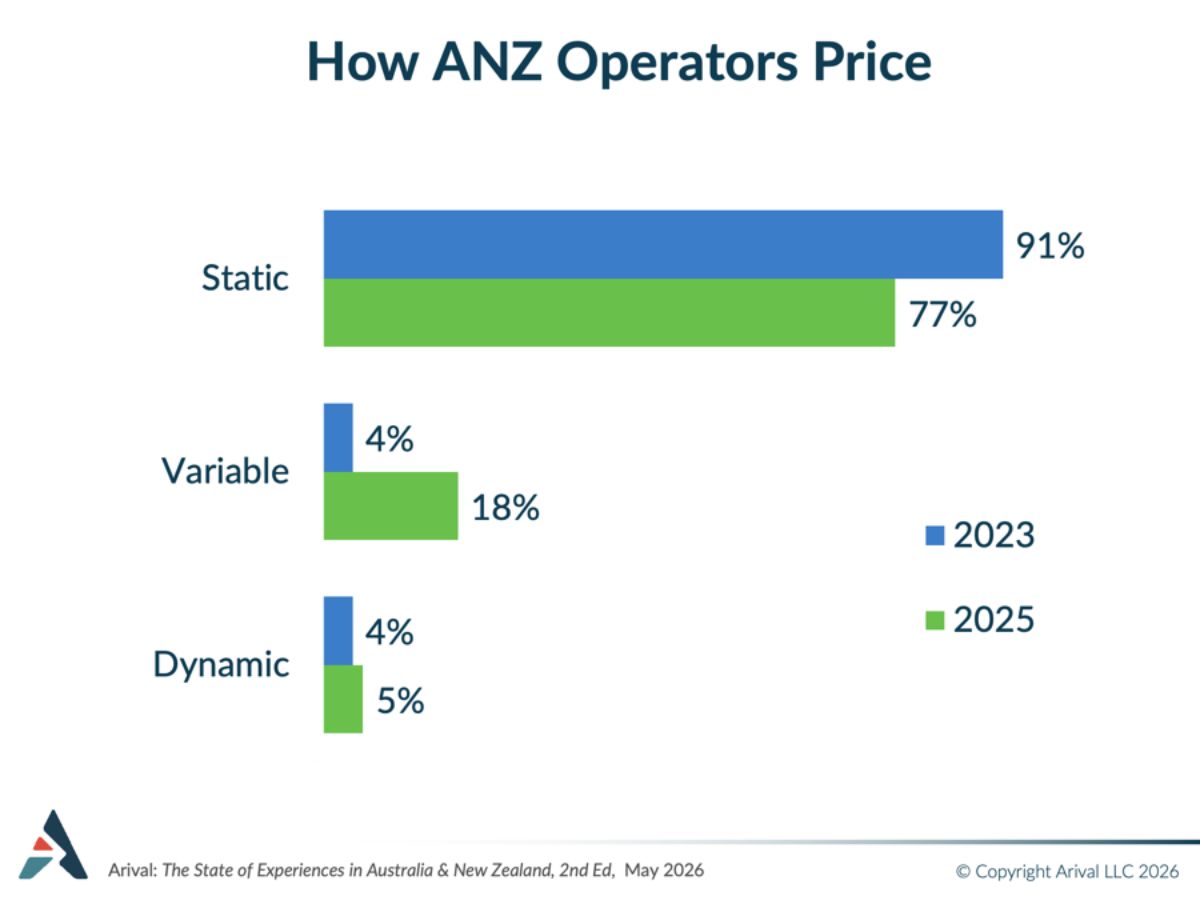
In Australia and New Zealand, 18% of operators now use variable pricing, up from just 11% in 2023. By comparison, only 5% of operators report using true dynamic pricing.
The Shift from Static to Strategic
For most tour, activity and attraction operators, pricing has historically been straightforward: set a price, publish it, and update it occasionally when costs rise.
That model still dominates, particularly among smaller operators, which account for the the majority of the sector (74% of tour operators and 31% of attractions survey less than 10,000 guests per year). And there’s good reason. Static pricing is easier to manage, to communicate to guests, and to distribute across reseller and OTA channels, which have been slow to support automated price changes.
But operators are increasingly recognizing the limitations of fixed pricing — especially in a market shaped by fluctuating demand, increased competition and rising operating costs.
As a result, more operators are beginning to implement variable pricing models, which include higher prices on weekends or peak days, lower pricing for off-peak departures or time slots, and other approaches.
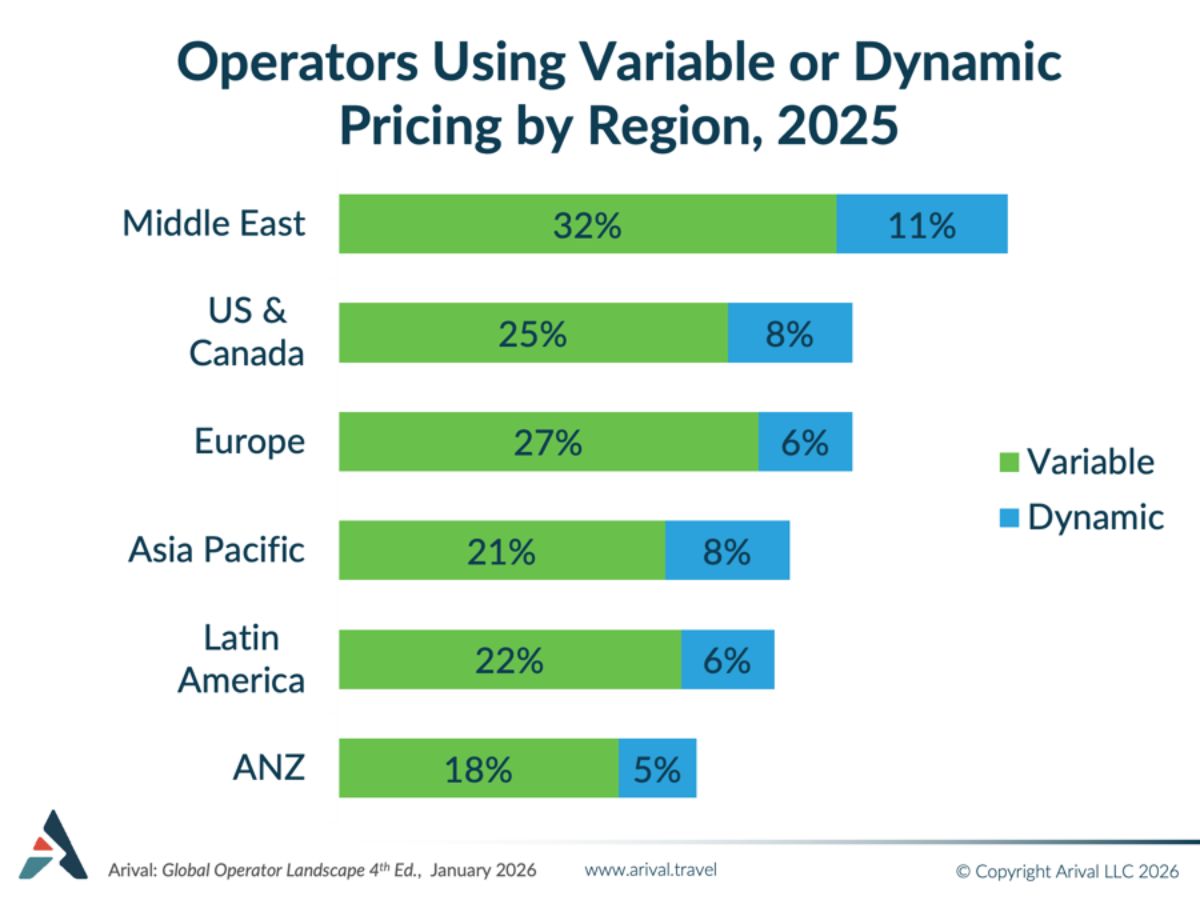
These are meaningful changes. While ANZ still trails the global average for variable pricing adoption (18% of operators versus 25% globally), the increase from just 11% in 2023 signals a growing recognition that pricing is more than an operational decision – it is a competitive advantage.
More fundamentally, not all inventory has the same value. A Saturday sunset cruise is not equivalent to a Tuesday morning departure. An attraction ticket on a school holiday is not the same product as a rainy weekday admission in low season. Yet many operators continue to price these experiences identically. The growing adoption of variable pricing reflects a mindset shift: pricing is not simply as a reflection of costs, but a lever to better align value, demand, and revenue.
Join us at an upcoming Arival event to connect, learn, & grow your tours, activities, & attractions business
Dynamic Pricing Remains Rare
True dynamic pricing — where prices shift continuously based on demand conditions, occupancy, booking pace or market signals — remains uncommon in the ANZ experiences sector, with just 5% of operators reporting using it (and it’s mostly larger operators and attractions).
Most operators are still relatively small businesses and do not have a dedicated revenue manager or pricing technology. However, this is changing. Technology is making pricing optimization more accessible. Booking systems are increasingly introducing pricing rules and revenue management tools, while specialized providers such as Digonex and newer entrants including WalkWay and Aloja are bringing pricing intelligence and capabilities to the sector.
From Static to Strategy
For decades, many experience operators approached pricing as a simple exercise: calculate costs, add a margin, set a price.That approach has become increasingly inadequate.
Pricing is no longer just a finance function. It is commercial strategy.
That doesn’t mean every operator needs airline-style yield management. But it does mean operators should think more strategically about how they price different products, departure times, customer segments and premium offerings.
Many operators are still leaving revenue on the table by underpricing peak-demand inventory, failing to differentiate premium experiences, or treating all departures as equally valuable.
The winners over the next decade may not be those with the lowest prices, but those that become better at matching price to value and demand.
Learn More About Experiences in ANZ & Pricing Strategy with Arival
Join us at the upcoming Arival 360 event in Brisbane to connect with other creators and sellers of tours, activities, attractions, and multi-day experiences from across Oceania and APAC, learn more about the state of experiences in the region, and dig deeper in hands-on workshops dedicated to technology, connectivity, distribution, experience design, AI, pricing strategy and more.
Become an Insider Pro Access member today and get access to the full library of Arival research, plus many other benefits such as free consulting sessions, special discounts and 20% off in-person events, starting from $179 per year.
Sign up to receive insights tailored for the in-destination industry as well as updates on Arival.
Header image: Pexels / Jakub Zerdzicki