



If you’ve ever wished to be a fly on the wall of your most profitable peers — and competitors — now’s your chance.
Arival’s latest study delved into the topic of profitability and financial performance, in order to get the inside intel on what the top performers do that the rest don’t. For the Global Operator Landscape (4th Ed.): The Profitable Operator report, we asked over 5,000 operators how profitable they are and then dug into what the most profitable ones do differently.

Of the operators in the profitable category, just over half reported margins higher than 10%. When looking closer at those lucky enough to be among the most profitable operators, one thing was very clear: they did not get there by luck. The most profitable operators share some common traits and practices.
Here are three highlights from our findings (the full report includes eight indicators of high-profit operators, and ten things the most profitable operators do differently):

1. Profitable Operators Have Well-Structured Systems
The most profitable operators run their businesses like the enterprises they are — not like hobbies or passion projects they happen to get paid for (even if they are also that!).
What does that look like in practice? Modern online booking systems, structured operational workflows, clear internal processes and automated customer communication. These aren’t luxuries for bigger operators; they’re the foundation of how high-margin tour, activity and attraction businesses operate at any size.
The data on booking systems alone tells a compelling story. The biggest contrast in tech adoption isn’t which platform operators use — it’s whether they use one at all. Booking system users are far more likely to show up in the profitable category, while 40% of unprofitable operators have no system in place. That’s a significant gap, and it’s not coincidental.
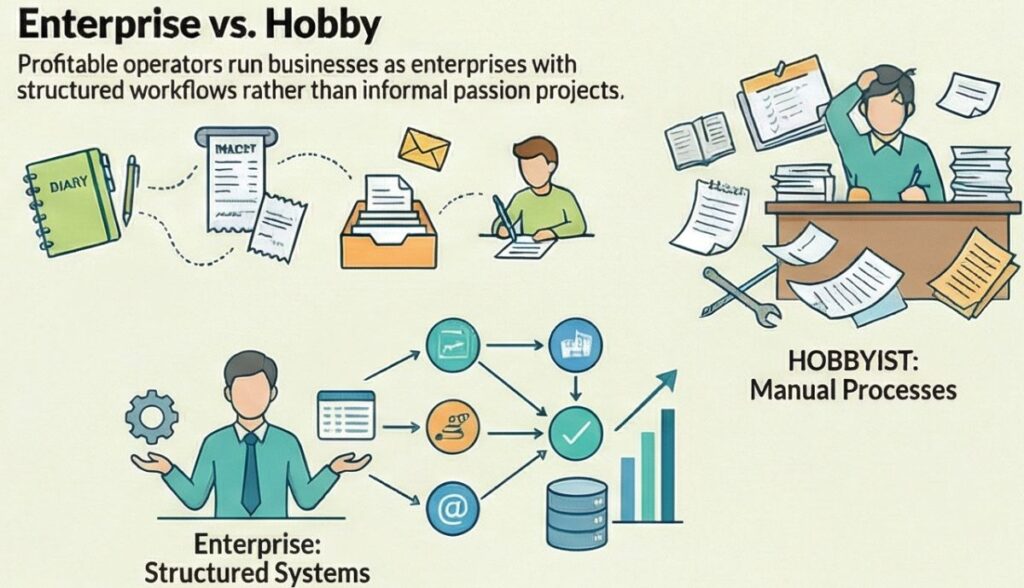
However, the most profitable operators go beyond simple tech adoption. They track what’s working, and aren’t afraid to change what’s not. They build systems that free them up to focus on growth — not just getting through each day.
Key Takeaway: If your operation still relies heavily on manual processes, spreadsheets, or informal communication, that’s a high-leverage place to focus. Here are some resources to get you started:
2. Profitable Operators Have Diversified Sales Channels
High-performing operators don’t put all their eggs in one basket — and the data backs this up clearly.
The most profitable operators build multi-channel distribution strategies: a balanced mix of direct digital sales, strategic online travel agency (OTA) partnerships, and additional channels like affiliate programs, travel advisors, and other resellers. They’re intentional about how they reach customers and don’t rely on any single source to carry the load.
The key learning here isn’t simply “use OTAs.” It’s that operators selling through a diversity of channels consistently outperform operators relying primarily on a single channel — regardless of which channels they’re using. Whether you’re over-dependent on one OTA, exclusively targeting direct website bookings, or only accepting walk-ups, a narrow channel strategy puts a ceiling on your revenue potential and leaves you exposed when any one channel underperforms.
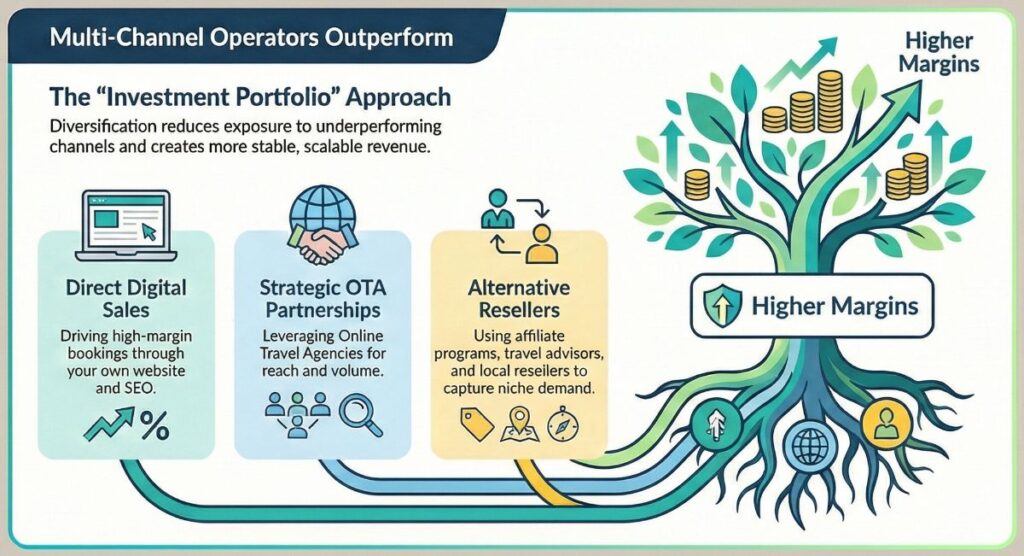
The practical implication: think of your distribution strategy the way you’d think about an investment portfolio. Diversification reduces risk and creates more stable, scalable revenue.
Key Takeaway: For operators looking to improve margins, an honest audit of your current channel mix is a great place to start. Here are a few resources to guide you:
13-15 April 2027 Insider Pro Access Members Save 20% THE event of the year for the European in-destination experiences industry Save up to €850 with an Autumn Advantage Ticket as an Insider Pro Member!
3. Profitable Operators Invest in Digital Marketing
This one shouldn’t surprise you — but the extent of the gap might.
The digital capability of operators correlates strongly with higher profit margins across the board. Operators who invest in digital marketing tools, from their website and SEO to branding and social media, consistently outperform those still relying primarily on organic discovery, offline sales, or manual processes.
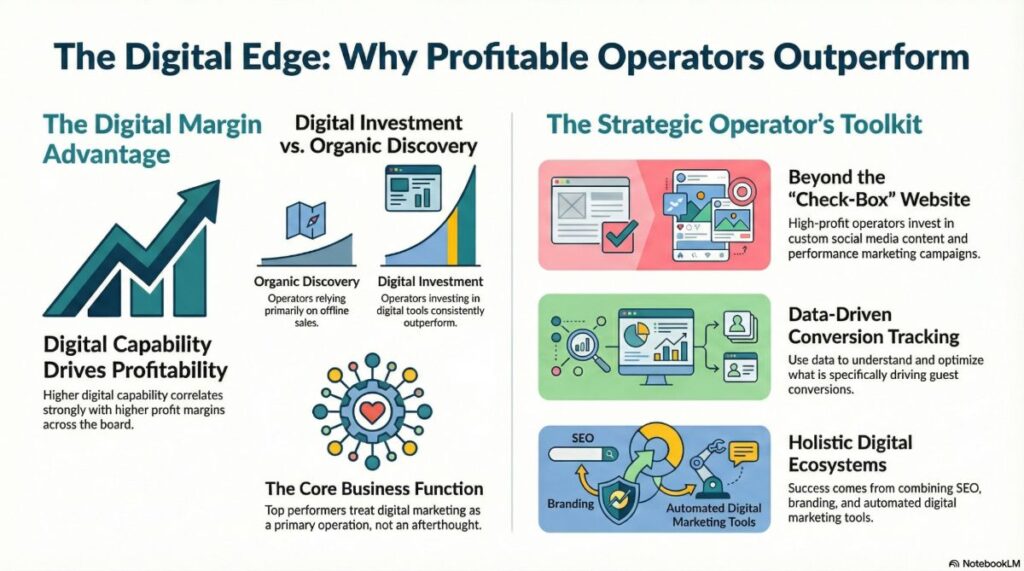
But high-profit operators aren’t just checking a digital box. They’re strategic about it. They don’t just put up a website and call it done — they invest in developing their own social media content strategies, run performance marketing campaigns, and use data to understand what’s driving conversions. In short, they treat digital marketing as a core business function, not an afterthought.
Key Takeaway: Each step toward a stronger digital presence — a faster website, better SEO, email automation, tracking your booking conversion rate — moves you toward the profitability profile of the top performers in the sector. Here are a few steps you can take:
- Ensure you’re listed and optimized on Google Things to Do (walkthrough here), and explore using Google Things to Do Ads
- Make sure you’re not making these Three Common Operator Marketing Mistakes
- Explore these tips for tour operators on TikTok and Instagram
Want to Know All Eight Indicators of a High-Profit Operator?
These three findings are just the start. Arival’s full Profitable Operator report goes deeper, covering eight indicators that distinguish high-profit operators from the rest — and ten specific things the most profitable operators do differently that you can apply to your own business.
Whether you’re looking to fine-tune a business that’s already performing well or diagnose why margins feel stubbornly out of reach, this report gives you the data and the roadmap to take action. The full report is available exclusively to Arival Insider Pro Access members.
Become an Insider Pro Access member today and get access to the full library of Arival research, plus many other benefits such as free consulting sessions, special discounts and 20% off in-person events, starting from $179 per year.
Get the full Arival experience by joining us at an upcoming Arival event, and hear the latest research insights and tips on distribution and connectivity for the experiences sector directly from tours, activities and attractions industry leaders and experts.
Header photo: Unsplash / Aaron Burden