

Google Things To Do ads put your tours and attractions in front of travelers at the exact moment they’re deciding what to do.
For tour operators, this format offers something traditional PPC (pay per click) and display ads struggle to deliver: visibility during the discovery phase when travelers are actively looking for experiences, not just browsing passively.
This article covers how Google Things To Do ads for tour operators work, who engages with them, what you need to get started, so you can convert to bookings right away.
Here’s what we’ll cover:
- How Google Things To Do ads support tour and activity bookings
- The travelers who engage & book with Google Things To Do listings
- Requirements for running Google Things To Do ads
- GTTD ad strategies that convert tour browsers into bookers
- Strategic placement: Where your tour ads show up and when
- Measuring impact and tracking booking performance
- Common issues that reduce ad performance
- Integrating Google Things To Do ads into your broader marketing strategy
- Next steps for tour operators ready to use Things To Do ads
How Google Things To Do ads support tour and activity bookings
Most advertising channels put your tours in front of people who may or may not travel someday. Google Things To Do ads for experiences work differently. They surface your listings when travelers are actively exploring what to do at a specific destination, right when decisions are being made.
I’m currently visiting Bali and have attached a screenshot below as reference. As you can see, I searched “what to do in Bali” and was returned results from Balicopter Tours and GetYourGuide.
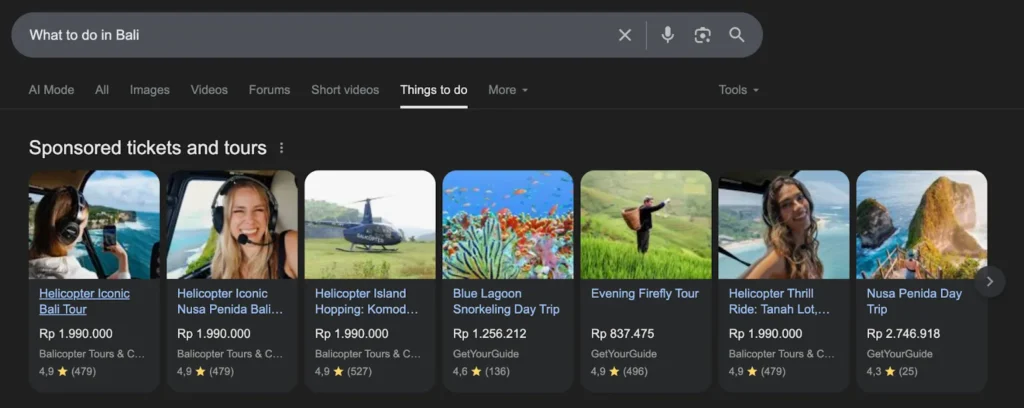
This timing matters because travelers in discovery mode behave differently than those passively scrolling social feeds. Someone searching “things to do in Bali” has already committed to visiting, or like me, is already in-destination. Your ad appears at exactly this moment, positioned alongside the options they’re evaluating, and with imagery instead of just text which is a proven factor in increased CTR (click through rate).
The format integrates directly into Google Search and Maps, placing your tours within the guests flow of trip planning. For tour operators looking to understand how to get more bookings, this represents a shift from traditional PPC and display ads. Things To Do positions your experiences where high-intent travelers are already comparing options, delivering more qualified traffic to your checkout page.
Note that you do not have to participate in Google’s advertising program in order to have your experiences appear on Google Things To Do — learn more in Arival’s Google Things To Do walkthrough. However, for operators seeking greater visibility for their products, including in Google’s “sponsored” sections, Things To Do ads may be worth considering.
Placement in the traveler journey
Traveler decisions unfold across three stages: dreaming, planning, and booking. During dreaming, they scroll Instagram or Tiktok, watch travel videos, and imagine possibilities. During planning, they research logistics, accommodation, and available experiences (not necessarily in this order — experiences, and in some cases events, are driving destination choice for a growing number of travelers). Booking is when they commit.
Google Things To Do ads appear at the inflection point between planning and booking. A traveler tapping on the Eiffel Tower in Maps or searching “food tours in Lisbon” has moved past inspiration. They’re building an itinerary and deciding which experiences make the cut. Your listing surfaces during this evaluation, not before it.
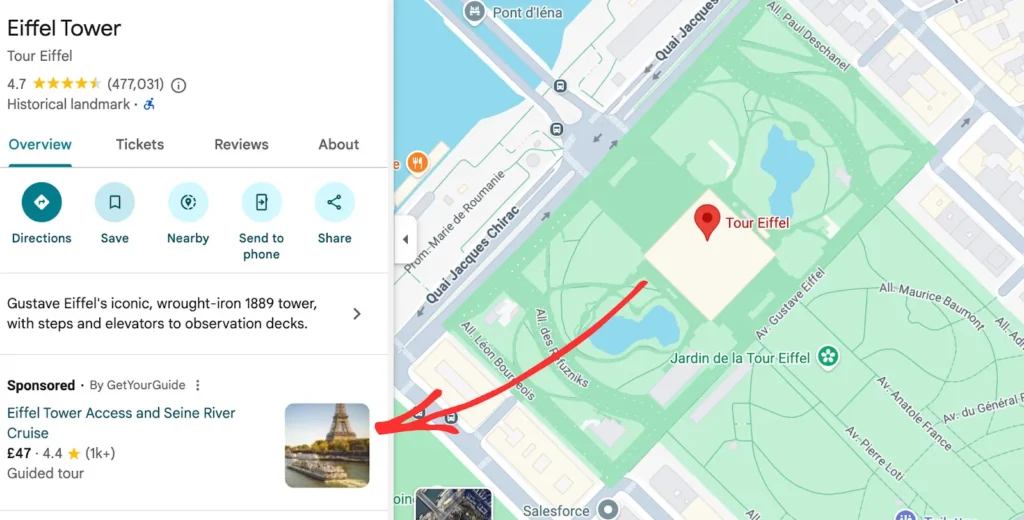
Visitors who click through have already seen your price, duration, and reviews alongside competitors. They’ve made an initial choice before landing on your site, which typically means lower bounce rates* and stronger conversions because they know what to expect.
*A bounce rate is the rate in which someone leaves your page, generally speaking the shorter the bounce rate the lower the conversion rate.
Differences from other Google ad formats
Traditional Google Search Ads target keywords and compete for attention across broad results pages. Local Service Ads focus on service providers like plumbers or electricians, not experience-based businesses. Google Business Profile listings offer visibility but rely on organic ranking and don’t guarantee placement during high-intent searches.
Things To Do ads occupy a distinct space. They appear within a dedicated experiences module, triggered specifically when travelers search for activities at a destination. And as previously mentioned also include imagery which helps with click through rate.
27-29 April 2026
Insider Pro Access Members Save 20%
THE event of the year for the European in-destination experiences industry
Save up to €730 with a Holiday Savings Ticket!
The travelers who engage & book with Google Things To Do listings
The travelers using these listings span a wide range: solo adventurers researching walking tours, couples comparing sunset experiences, families filtering for kid-friendly options, and friend groups hunting for shared activities. No matter what the traveler demographic they are all searching with high intent as they have likely committed to the destination.
When scanning your listing, they’re weighing several factors simultaneously: price, duration, experience type, accessibility, and tour style. Your listing appears alongside competitors, which means clarity wins. Vague descriptions, missing details, poor imagery, or unclear pricing create friction that pushes travelers toward listings that answer their questions upfront. The operators who convert browsers into bookers are those who present exactly what travelers need to see at the moment they need to see it in a trustworthy way.
Aligning tour positioning with traveler intent
Each traveler segment evaluates listings through a different lens. Tailor your positioning and messaging accordingly. The table below breaks down what drives their decisions:
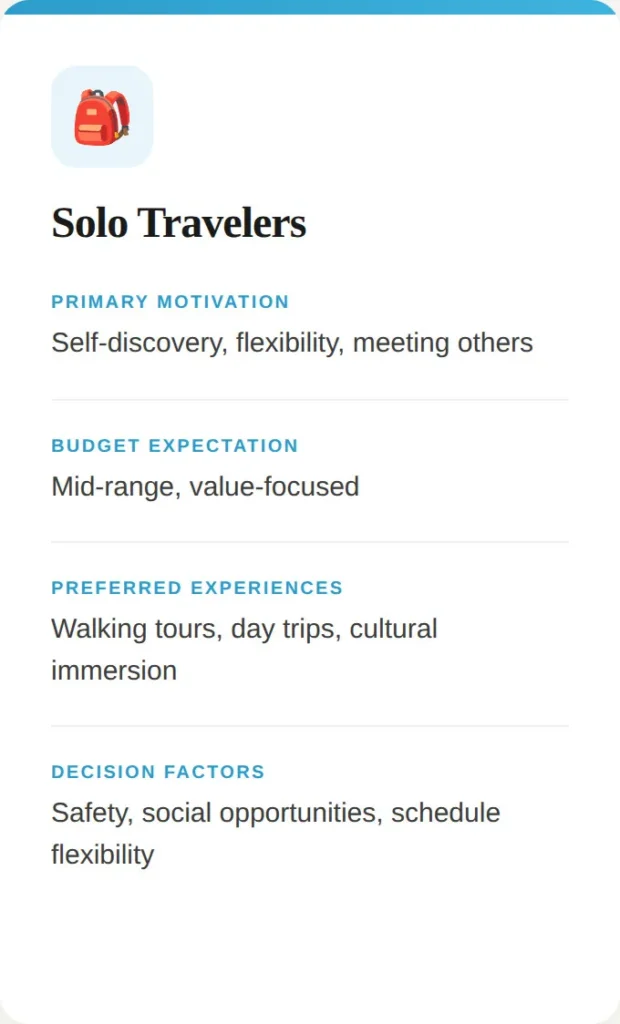
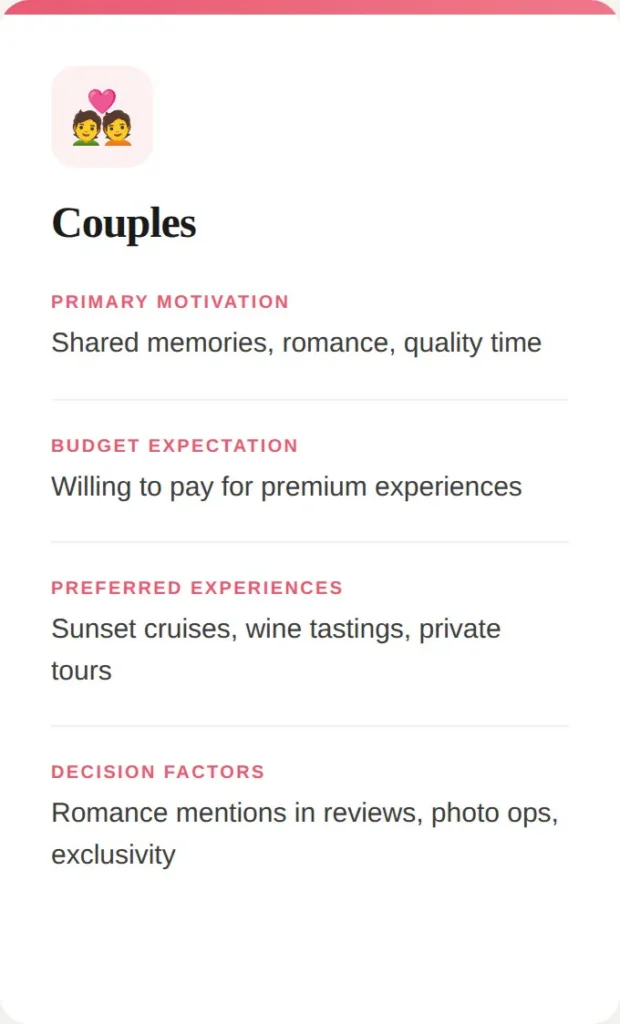
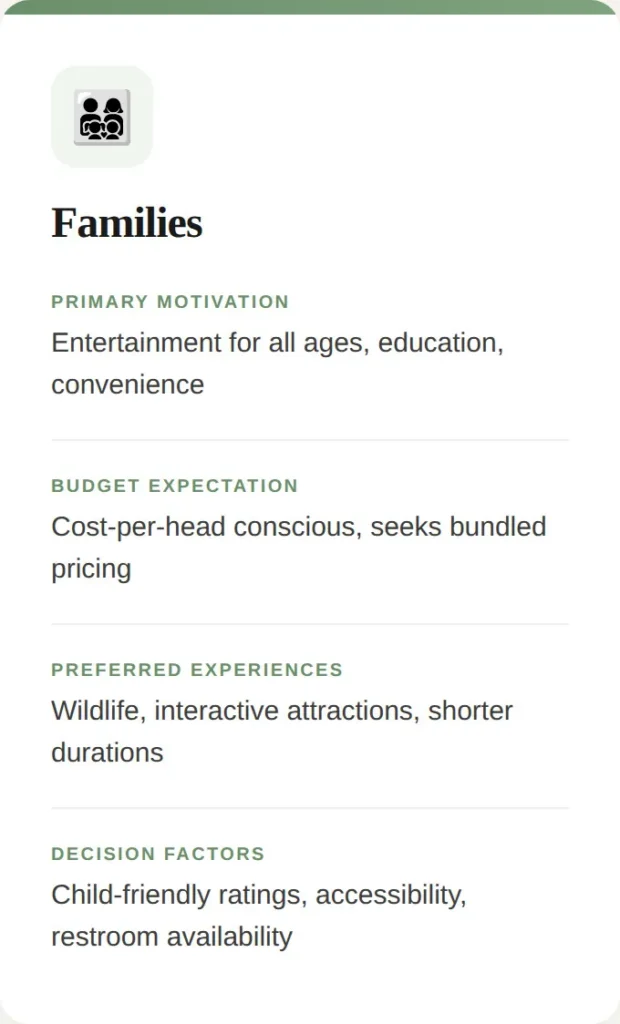
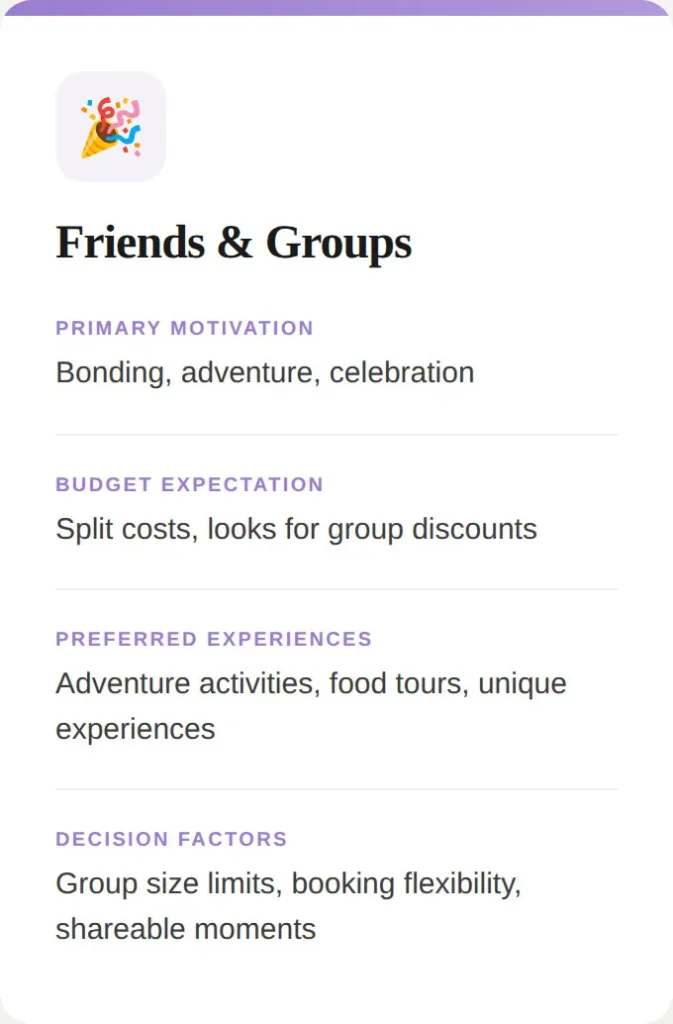
Understanding these distinctions allows you to create listings that speak directly to each customer profile.
Requirements for running Google Things To Do ads
Before launching campaigns, you need to meet Google’s eligibility criteria and ensure their business data is complete and accurate. Google pulls listing information from multiple sources including your Google Business Profile, connected booking platforms, and feed integrations, so inconsistencies in these places can create problems.
It is worth keeping in mind many tour operator software platforms or restechs such as Bókun or Magpie offer direct Google Things To Do integrations, simplifying the feed setup process considerably (see the full list of approved Things To Do connectivity partners here).
Operators who invest time upfront in making sure all their information is accurate see faster approvals, better placement, and stronger conversion rates.
Eligibility and Operational Readiness
Google Things To Do supports tours, activities, attractions, and ticketed experiences. This includes walking tours, food experiences, adventure activities, museum entries, day trips, classes, and similar bookable offerings. Both single-location attractions and multi-stop tours qualify.
Seasonal operators are eligible provided availability is accurately reflected, listings must show current operating status, not year-round hours when you’re closed for winter. Limited-operation offerings like weekly-only tours or special event experiences also qualify, but require precise scheduling data.
Key eligibility requirements:
- You must offer direct online booking.
- You must operate legally in your destination.
- You must provide experiences that travelers can purchase as standalone products.
Resellers and aggregators face additional verification. Businesses without real-time booking capability or those offering non-bookable services (like travel planning consultations) don’t qualify.
Business information Google uses to build listings and ads
Google uses the following information to build listings and ads. Here are some tips to ensure the information you’re providing meets Google’s requirements for Things To Do ads:
- Pricing: Display accurate per-person rates including any pax type variations (adult, child, group).
- Images: Provide high-resolution photos (minimum 1200×900 pixels) showing authentic experience moments.
- Descriptions: Write clear, specific copy covering what guests experience, duration, and highlights.
- Location details: Specify exact meeting points or venue addresses. Accurate location data ensures your listing appears in geographically relevant searches and Maps results.
- Booking links: Provide direct URLs to your reservation page that load quickly and function on mobile. Broken or slow links trigger disapprovals and lose ready-to-book travelers.
- Operating hours and availability: Show current schedules including seasonal variations and blackout dates.
GTTD ad strategies that convert tour browsers into bookers
In a discovery environment where travelers compare multiple options simultaneously, these best practices will help your ads stand out.
Writing ad copy that reflects traveler motivations
Match your copy to what each traveler segment actually cares about. Adventure seekers respond to action language and unique access, “kayak through sea caves at sunrise.” Culture-focused travelers want depth and expertise “led by a local historian.” Families need reassurance “stroller-friendly with kid-approved stops.” Couples seek atmosphere “intimate sunset”
Study your search terms and reviews to identify which motivations drive your bookings. If guests repeatedly mention your guide’s storytelling, lead with that. If they highlight hidden spots locals love, make that your hook. Let real guest language shape your positioning rather than inventing what you think sounds appealing.
Selecting images and visuals that influence traveler choices
Authentic moments over posed shots: Use images of guests engaged in the experience to build trust. Staged smiles feel generic; genuine reactions feel real.
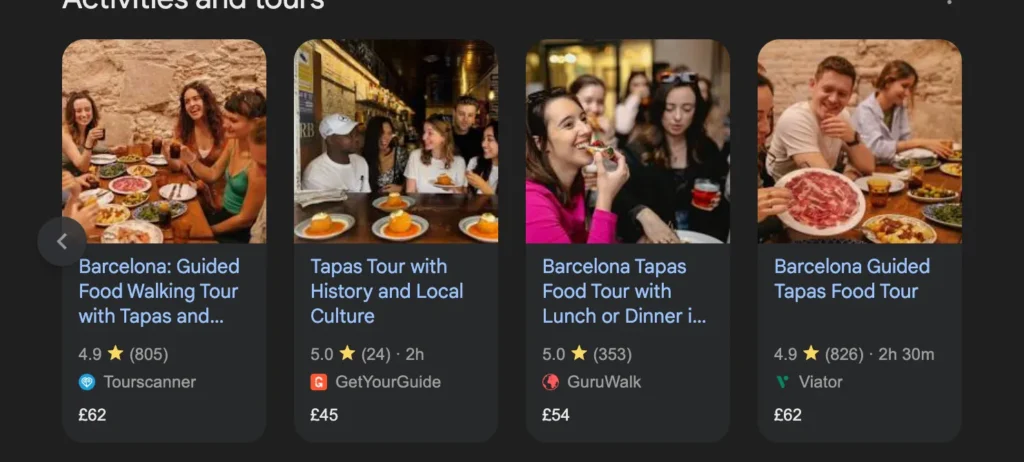
Guide interactions: Images showing your guide actively engaging with guests communicate expertise and personal connection, key differentiators from self-guided alternatives.
Unique perspectives: Capture angles and access points travelers can’t get on their own. A rooftop view, behind-the-scenes kitchen, or exclusive location signals value.
Context and setting: Show the destination, not just people. Travelers are buying an experience in a place: make both visible. If your tour includes food, use close-ups of food also.
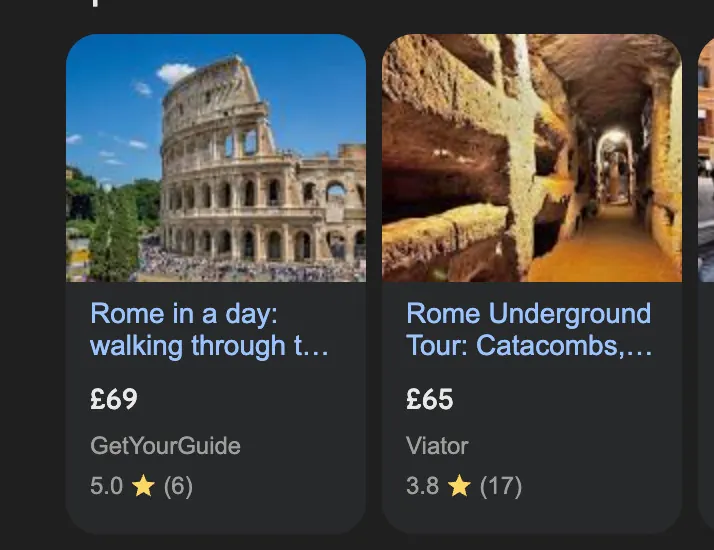
Communicating Pricing and Value Clearly
Ambiguous pricing kills conversions. Display your per-person rate prominently, and clarify what’s included: meals, transport, entrance fees, equipment. Travelers comparing listings will default to whichever option eliminates uncertainty fastest.
If you offer group discounts or early booking rates, state the terms explicitly—”Book 7+ days ahead for 10% off” works better than vague “discounts available.” Avoid hiding fees that surface at checkout; this erodes trust and drives cart abandonment. When your price is higher than competitors, justify it: smaller groups, exclusive access, premium inclusions. Value transparency isn’t just ethical—it filters for guests who appreciate what you actually offer.

13-16 Oct 2026
Insider Pro Access Members Save 20%
THE event of the year for creators and sellers of destination experiences to connect, learn & grow.
Get YourSuper Early Bird Ticket Through 13 January!
Strategic placement: Where your tour ads show up and when
Google determines which listings appear based on several weighted signals. Data quality matters most: complete business profiles with accurate pricing, current availability, and detailed descriptions rank higher. Relevance comes next—how closely your listing matches the traveler’s search intent and location context. Bidding strength influences competitive positioning, especially during high-demand periods. Finally, engagement behavior factors in: listings with strong click-through rates and positive reviews earn preferential placement over time. Your ad isn’t just competing on budget; it’s competing on how well your entire listing ecosystem performs across these dimensions.
Bid strategy and smart budget allocation
Your bidding model determines how Google spends your budget and which travelers see your listings. Choose wrong, and you’ll either overspend on low-intent clicks or miss high-value bookings entirely. The right approach depends on where you are in your advertising journey,new operators need control and learning opportunities, while established campaigns benefit from automation that optimizes toward actual bookings.
The table below breaks down each bidding strategy by experience level, budget requirements, and when to use it:
Bidding Strategies for Tour Operators
Choose the right bidding model based on your experience level, budget, and campaign goals.
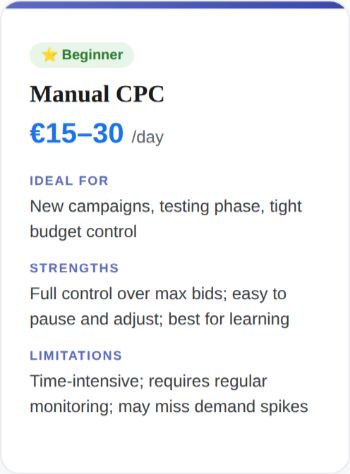
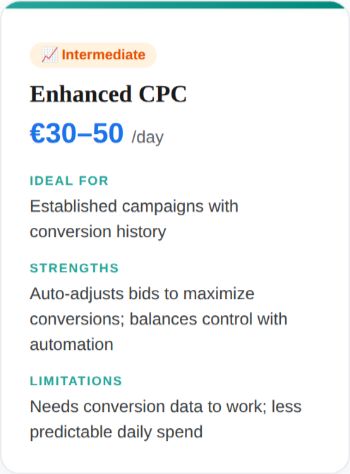

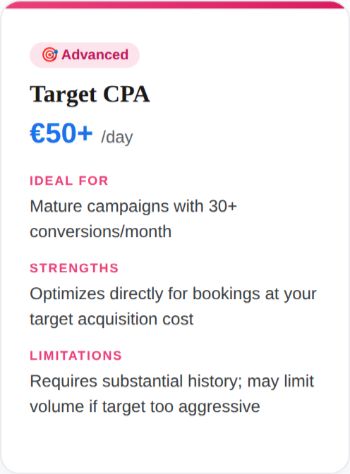
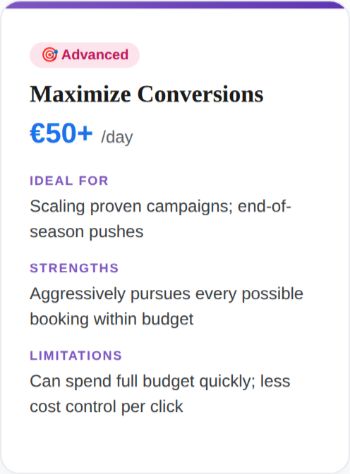
Our Recommendation: Start with Manual CPC for 4-6 weeks to gather data. Once you have conversion history, transition to Enhanced CPC or Target CPA to let Google optimize for bookings.
Seasonal and event-based ad optimization
Demand for tours fluctuates predictably around holidays, local festivals, school breaks, and destination-specific events. Operators who adjust bids and budgets ahead of these peaks capture traffic competitors miss.
Build a calendar mapping your destination’s demand drivers: Christmas markets, cherry blossom season, major conferences, national holidays. Increase budgets 2–3 weeks before each peak to build momentum. Create event-specific ad variations where relevant—”Carnival week tours” or “Holiday lights walking tour”—to match traveler search intent precisely. After each event, review performance data to refine next year’s approach. Seasonality isn’t a disruption to manage; it’s an opportunity to capture outsized returns when competition intensifies.
Measuring impact and tracking booking performance
Impressions tell you visibility exists; they say nothing about revenue. The metrics that matter connect ad spend directly to completed bookings and guest value. Operators who track only surface-level data—impressions, clicks—often overspend on campaigns that feel active but don’t convert. Those who measure cost per booking, revenue per ad dollar, and downstream guest behavior make smarter allocation decisions. The gap between “our ads are running” and “our ads are profitable” lives entirely in how rigorously you connect advertising activity to actual booking outcomes.
KPIs that reflect true booking success
- Click-through rate (CTR): Measures how often viewers click your listing. Low CTR signals weak visuals, unclear value, or poor positioning against competitors.
- Conversion rate: Tracks clicks that become bookings. Low conversion suggests landing page friction, pricing confusion, or mismatched expectations from the ad.
- Cost per booking: Your ad spend divided by completed bookings. This reveals true acquisition cost and whether your margins support the channel.
- Return on ad spend (ROAS): Revenue generated per euro spent. The clearest indicator of campaign profitability—aim for 4:1 or higher for sustainable performance.
- Average booking value: Tracks whether ads attract guests who book premium options or add-ons, indicating audience quality beyond volume.
Connecting Google Ads data to actual tour bookings
Linking ad clicks to real bookings requires connecting your advertising account with your reservation system. Use UTM parameters on all booking links to track which campaigns, keywords, and listings drive conversions. Configure your Google Ads conversion tracking to fire when a booking completes, not just when someone lands on your site.
For deeper insight, export your booking data and match it against ad engagement by date and source. Calculate the true cost per acquired guest by factoring in cancellations and no-shows. Some operators integrate their booking platform directly with Google Analytics 4 for automated attribution. The goal of all of this is to know exactly which ad spend produces paying guests, not just traffic.
Common issues that reduce ad performance
Most underperforming campaigns share predictable problems. Poor image quality signals low professionalism and gets scrolled past. Vague messaging fails to differentiate from competitors, leaving travelers no reason to choose you. Incorrect data—wrong prices, outdated hours, broken links—creates friction that kills conversions and damages trust. Technical setup gaps, like missing categories or incomplete profiles, suppress visibility before travelers ever see your listing.
These issues compound: a weak image leads to low CTR, which signals poor relevance to Google, which reduces your placement, which wastes your budget on increasingly invisible ads.
Messaging misalignment
When your listing promises something your tour doesn’t deliver—or attracts the wrong audience entirely—problems cascade. Travelers expecting an intimate experience arrive at a crowded group tour. Those seeking adventure find a leisurely walk. The result: disappointed guests, negative reviews, and refund requests.
Misalignment also wastes ad spend. You pay for clicks from travelers who were never your ideal customer. They bounce quickly, damaging your conversion metrics. Over time, poor engagement signals reduce your placement quality.
Fix this by auditing your copy against actual guest feedback. What do happy customers praise? Lead with that. What do unhappy ones complain about? Eliminate those expectations from your messaging.
Technical issues that suppress visibility
Common errors that limit your ads’ reach include outdated pricing that mismatches your booking page, triggering disapprovals or guest frustration. Broken booking links send interested travelers to error pages, an immediate lost sale. Category mismatches place your listing in irrelevant searches, attracting wrong-fit clicks.
27-29 April 2026
Insider Pro Access Members Save 20%
THE event of the year for the European in-destination experiences industry
Save up to €730 with a Holiday Savings Ticket!
Integrating Google Things To Do ads into your broader marketing strategy
Ads for Things To Do perform best as part of an interconnected system rather than an isolated channel. Strong SEO ensures travelers who don’t click ads still find you organically. Positive reviews boost both your ad placement and conversion rates. Content marketing—blog posts, videos, destination guides—builds authority that reinforces paid visibility.
Email campaigns re-engage past guests, driving repeat bookings that improve lifetime customer value. Partnerships with hotels, DMOs, or complementary operators extend reach beyond what advertising alone achieves. Think ecosystem, not channel: each element strengthens the others, creating compounding returns that make every marketing dollar (or euro) work harder.
What’s next: Google is expanding Things To Do ad formats
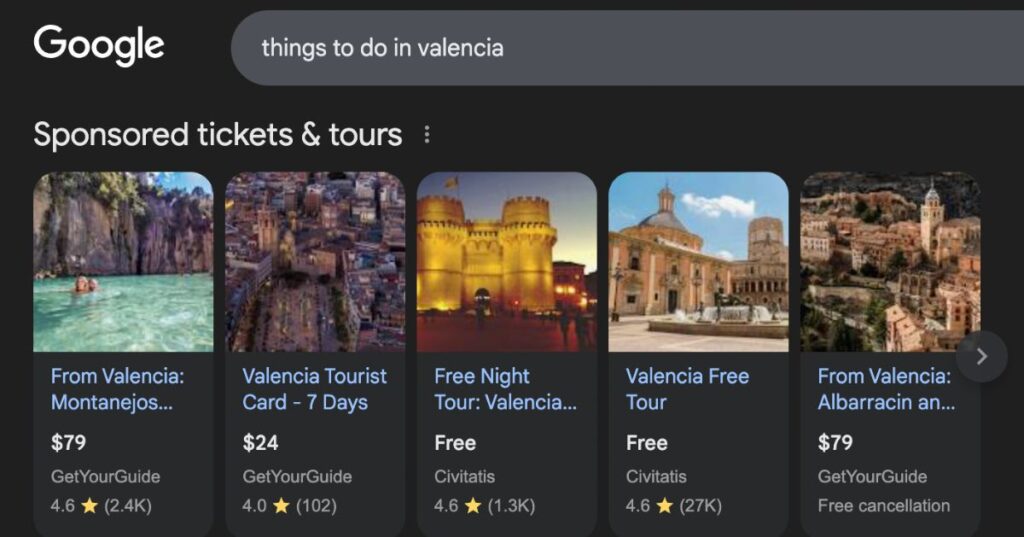
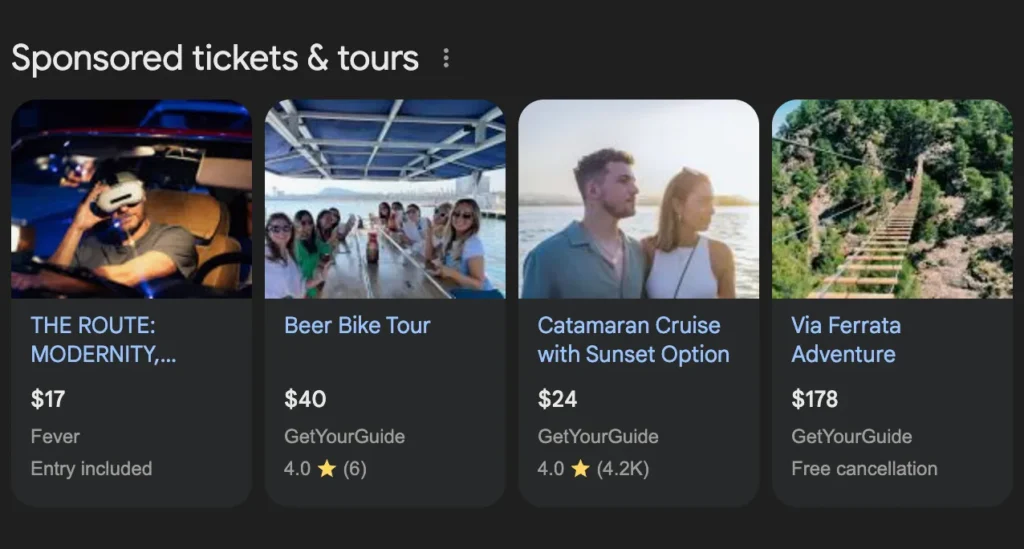
Google is actively testing new ad placements that surface when travelers search for major attractions like Disneyland California or Universal Orlando. These appear in a dedicated “Sponsored tickets & tours” section, letting users compare prices and click through to book without leaving the search results.
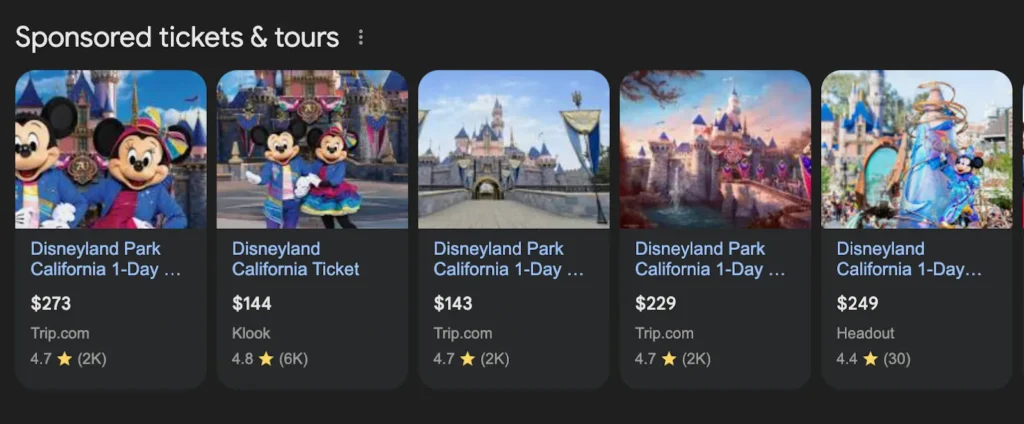
Even more interesting: travelers can now enter a conversational interface to refine preferences, adjust budgets, and compare options, blurring the line between search and booking. For tour operators, this signals Google’s deepening commitment to the experiences space. Getting your listings and feed data dialed in now positions you to benefit as these formats roll out more broadly.
Next steps for tour operators ready to use Things To Do ads
We hope this guide for advertising on Google Things To Do helps you to get started. To begin with:
- Audit your current Google Business Profile and any existing Things To Do listings. Verify all information is accurate: pricing, availability, descriptions, images, booking links. Fix gaps before spending on ads—poor data quality undermines everything else.
- Refine your positioning. Review competitor listings and identify what differentiates your experience. Update copy and visuals to reflect that distinction clearly.
- Launch a modest test campaign with manual CPC bidding. Monitor performance weekly, focusing on CTR and cost per booking rather than impressions. After 30 days, assess results and adjust bids, targeting, or creative based on data. Scale what works; cut what doesn’t.
Start small, measure everything, and let the data guide your next move.You now have what you need to put your tours in front of travelers at the moment they’re ready to book, the rest is execution.
About the Author

Oliver Green is a Fractional CMO and marketing consultant in the tourism and experiences sector, specialising in AI, social commerce, and growth strategy. Has built communities reaching hundreds of thousands of members and scaled social channels to a combined audience of 1M+.
Learn more about Google Things To Do with Arival
Check out our library of resources on Google Things To Do, marketing with Google, other travel distribution channels, and more. Better yet, join us for an upcoming Arival event to learn more from industry experts in person on the latest with Google Things To Do, digital marketing and advertising for operators of tours, activities and attractions.
Become an Insider Pro Access member today and get access to the full library of Arival research, plus many other benefits such as free consulting sessions, special discounts and 20% off in-person events, starting from $179 per year.
Sign up to receive insights tailored for the in-destination industry as well as updates on Arival.