


Arival’s The State of Multi-Day Tours (2nd Ed.) found that third-party resellers account for 29% of all bookings in the multi-day sector — bigger than online travel agencies (OTAs) at 19%, and bigger than direct website bookings at 20%. Business-to-business (B2B) distribution is the single largest sales channel available to multi-day operators, and for many, it was the financial lifeline that kept their business operating during the pandemic.
For a channel this important, what surprised me was how little has been written about B2B distribution. There is no shortage of content about OTAs and direct booking strategies, and that makes sense: both are visible, public-facing channels. On the other hand, B2B partnerships are private relationships, negotiated one-to-one, and the knowledge of how they work tends to stay inside the businesses that have built them.
So I reached out to operators with successful B2B channels to distill what they had learned. I spoke with seven multi-day operators whose B2B revenue ranges from 10% to 80% of their total revenue. Many had started out purely B2C, not fully appreciating that B2B would become one of their most reliable sources of new customers and recurring revenue.
This article draws on their experience to help you build and grow your B2B channel.
Key Takeaways:
- B2B partnerships have long lead times, typically one to two years before a partner delivers meaningful revenue.
- The flip side is stability: once established, they tend to deliver steady, growing volume over time.
- There are four distinct types of B2B partnerships, each requiring a different approach and most operators work with a mix.
- The hardest part isn’t finding potential partners, it’s finding the right partners.
- Success depends on alignment: partners need to know your product, and you need to know their customers.
What is B2B Distribution?
B2B distribution is a commercial arrangement between a tour operator and a distributor, where the distributor sells the operator’s products to its own customers. Distribution partners come in many forms: travel advisors, outbound tour operators, and international travel brands are the most established, but B2B relationships can extend well beyond traditional trade to universities, membership organizations, and niche communities built around shared interests.
What makes B2B distribution distinctive is that every arrangement is, at its core, a one-to-one relationship. Two businesses agree on terms, build trust over time, and develop a way of working that is unique to them. That means no two B2B partnerships look exactly alike — the product, the commercial terms, the level of collaboration, and the volume of business all vary depending on who the partners are and what they are trying to achieve together.
Established multi-day tour operators treat channel diversification as a deliberate strategy for building a more resilient business. The operators interviewed all spoke of aiming for a balance of direct B2C revenue alongside B2B, and within their B2B portfolio, a spread of different partner types. Concentration risk is a concern in B2B: over-reliance on any single partner creates vulnerability, and a mature B2B channel is one where no single partner’s departure would seriously damage the business.
The Benefits of B2B Distribution
B2B distribution offers multi-day tour operators four distinct advantages over B2C.
1. Predictable Revenue in Large Volumes
B2B partners don’t book one at a time — they deliver blocks of volume. That makes planning easier and cashflow more certain.
“When I can do group business (B2B) and I know what’s coming, I can plan accordingly,” says Renee Kimball of Tranquilo Bay. “With direct business (B2C), I must have more guides on site at all times, more boats, more staff — all of that. It has different costs.”

2. Long-Term Repeat Business
B2B partnerships don’t typically reset each year. A distributor who books with you once and has a good experience tends to come back, often with growing volume. Over time, a single partnership can become a reliable and expanding revenue stream that would take years to replicate through direct bookings alone.
3. One Relationship, Many Guests
Rather than managing hundreds of individual customer interactions, an operator can manage a single commercial relationship. The distributor handles its own customers — their questions, their expectations, their sales process. The operator focuses on delivering a great experience to the guests on arrival.
4. Scale Without the Sales Headcount
B2B distribution allows operators to grow without adding significant sales and marketing headcount and spend. The distributor brings its own sales infrastructure, its own marketing, and its own customer base. It is a point that often gets missed in the debate about commission rates.
“Nothing’s free is what operators need to realize,” says Kristy Malapa, General Manager of Untamed Escapes. “Everyone tries to push direct bookings because they can cut out the middlemen and not pay commissions, but there is a cost associated with direct bookings as well — your marketing money, your social media ads, the cost of staff, your marketing team who are attracting that person in the first place.”

The Challenges of B2B Distribution
B2B distribution is not a quick win. The most significant challenge is the length of time it takes from finding a partner to seeing meaningful revenue. Lead times in B2B are typically one to two years minimum, meaning a distributor who commits today may not send their first group until next year at the earliest. And even then, the volumes will likely be small, as distributors test a new product carefully before committing to larger bookings.
The lead time is only part of the picture. Setting up a B2B partnership requires significant upfront work. Fabien Selosse of Nomad’s Land estimates the upfront cost of establishing a new partnership in his own words: “For developing a program with a new partner before the sale is confirmed, I’d say I spend around 24 working hours. That covers developing the program, making changes, building the budget, and doing the preliminary logistics.”

Taking both together, operators should expect two to three years before a new B2B partner is bringing steady revenue, with significant upfront work required before that point is reached.
12-15 Oct 2026 Insider Pro Access Members Save 20% THE event of the year for creators and sellers of destination experiences to connect, learn & grow. Don’t Miss Out! Get Your Ticket Today!
4 Types of B2B Partnerships
B2B partnerships come in many shapes, sizes, and forms. While every arrangement is unique, they can be grouped into four types based on a single organizing principle: which parts of the value chain are owned by the operator, and which are ceded to the distributor.
The Tour Operator Value Chain
The tour operator value chain is the sequence of activities required to bring a trip to market. It runs from distribution and sales at one end — finding customers, marketing the product, closing the sale — through to product design, operations, and on-ground delivery at the other. In a purely B2C model, the operator owns every part of this chain. B2B distribution changes that equation: the operator outsources one or more parts of the chain to a distributor, trading control for reach.
Selosse experienced this shift firsthand. In his early days he saw B2C as the primary goal: “Before COVID, I really thought the future of tourism was to work directly with individuals,” he said. “Ideally, that’s still a principle I love — but it requires very strong marketing and a lot of investment.” Over time he came to see B2B as an essential part of a healthy channel mix, one that allowed him to focus on the parts of the value chain he enjoys most and does best: operations and delivery.
The four partnership types differ by who owns what part of the value chain. The table below, shows how ownership is divided across each partnership type.
B2B Partnership Value Chain Matrix
| Partnership Type | Distribution | Sales | Brand | Product | Operations & Delivery |
| 1. Referral Partner | Distributor | Operator | Operator | Operator | Operator |
| 2. Reseller | Distributor | Distributor | Operator | Operator | Operator |
| 3. White Label | Distributor | Distributor | Distributor | Operator | Operator |
| 4. On-Ground Partner | Distributor | Distributor | Distributor | Shared | Operator |
1. Referral Partner
A referral partner sells an operator’s branded product to their customer base in exchange for a commission or fee. The referral partner’s role is largely limited to generating leads — the operator is responsible for closing the sale, taking payment, and delivering the tour. The operator retains ownership of the customer relationship throughout.
The referral model is the lightest and quickest to set up of the four partnership types. There is no rebranding, no product modification, and no transfer of the customer relationship. Because the barrier to entry is low, operators can build a broad network of referral partners, creating a steady stream of leads across multiple sources. For operators new to B2B, it can be a natural first step — a way of extending reach without ceding control.
What Success Looks Like
Success comes from the volume and quality of leads generated. A referral partner needs to understand the product deeply — what it offers, who it is designed for, and who should buy it. That product knowledge is what drives quality leads and, ultimately, conversion.
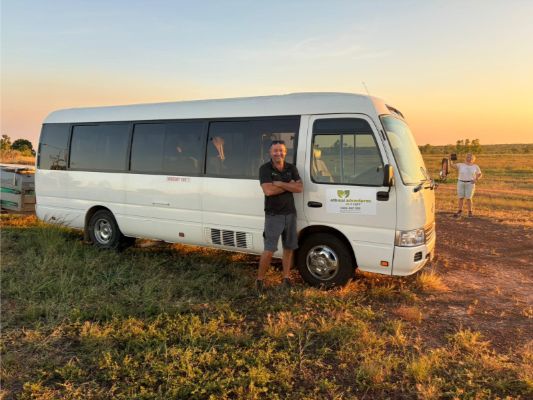
Rob Woods of Ethical Adventures sees this dynamic clearly: “The agent works for me. That’s the kind of thing you need to get to — the agent works for you as a tour company, not you work for the agent. They work for you simply because they believe in what you do, they love what you do, they’ve got clients that would really benefit from hanging out with you, and they’re going to get paid for matching up.”
2. Reseller
A reseller sells an operator’s branded product and is responsible for closing the sale and owning the customer relationship. The operator retains its brand and is responsible for operations and delivery. Travel agents are a common example of this type of partnership, and the model is particularly common among inbound operators seeking international exposure or access to new markets.
Because the reseller owns the customer relationship, their reputation is on the line. Before approving an operator for sale, a reseller will typically require certain standards to be met — public liability insurance, for example. Once approved, the operator onboards the reseller, which requires training both the product managers who manage the relationship and the agents who will be selling the product day to day.
What Success Looks Like
Similarly to the referral partner, success in a reseller partnership comes from deep product knowledge — but here the stakes are higher, because the reseller is responsible for closing the sale, not just generating the lead. A familiarisation trip for resellers is common, as it gives the reseller firsthand experience of the product they are selling. Resellers carry large portfolios across many destinations, so keeping the product front of mind requires ongoing engagement — regular communication, updated materials, and continued training as the product evolves.
When this works well, the reseller acts as a filter — qualifying clients before they ever reach the operator. When it does not, the operator pays the price. Woods has seen both sides.
“The thing is that the agent, if they’re doing the job properly, will look at that customer and they should be asking the right questions,” says Woods. “They’re qualifying them for you. If they’re not doing that, and we’re getting these things about price point, or they’re taking the itineraries and running, it’s like, you guys aren’t doing your job well enough.”
3. White Label
Under a white label arrangement, the distributor rebrands the operator’s product under their own brand and takes ownership of distribution, sales, and the customer relationship. The operator’s role is focused on operations and delivery. The product itself remains largely the operator’s design, with minor modifications to suit the distributor’s customer base.
White label requires more than putting a new logo on a uniform. A guide operating under a white label arrangement needs to understand and represent the distributor’s brand — its tone, its standards, and its customer expectations. Distributors running white label arrangements typically have their own product and operational requirements that must be met, and operators should expect a thorough due diligence process before the partnership is approved.
What Success Looks Like
Success in a white label partnership comes from being a reliable and consistent delivery partner that operates on brand. Operators who deliver consistently and represent the distributor’s brand well give the distributor the confidence to commit to growing volumes.
For Ruth Franklin, founder of Secret Paradise Maldives, that means making sure her team can fully step into someone else’s brand.
“If you’re doing a Destination Management Company (DMC) role and you’re providing a product under a brand, then your tour leader represents that brand and talks about their brand,” says Franklin. “It’s important to understand that, to ensure your team is set up and has all the knowledge to be able to do that.”

4. On-Ground Partner
An on-ground partner arrangement is the most complex of the four partnership types. The distributor and operator co-design a trip built around the distributor’s customers and marketing requirements and the operator’s on-ground expertise. The product is unique to the partnership, and exclusivity clauses are common — the operator may be required to act as the distributor’s exclusive on-ground partner for that product. DMCs often operate primarily in this role, and in some cases exclusively so, with little or no B2C business of their own.
The co-design process is collaborative by nature — together the distributor and operator work through the itinerary, refining it until it meets the needs of the distributor’s customers. This takes time and extends the sales cycle, which is why this type of partnership requires more upfront investment than any other.
What Success Looks Like
Success in an on-ground partnership comes from the operator’s ability to be flexible and to help the distributor design a product that genuinely meets the needs of their customers.
“Every B2B partner has their own conception of what they want to sell and how they want these trips to look like,” explains Selosse. “First, we have to listen to their requirements, then adapt, create a unique product together with them. Having flexibility is the key.”
Finding B2B Partners
“The most successful partnerships I have, I have not been finding them — they found me,” says Selosse.
This was a common theme throughout the interviews conducted for this article. When a partner seeks you out, it signals alignment — with your brand, your product, and the commercial opportunity — and that alignment lays the foundations for a successful partnership. But it rarely starts that way. In the early stages of building a B2B channel, it is about networking, getting to trade events, and letting the market know what you offer.
Choosing the Right Partner
The challenge in building a B2B channel is not finding partners — there are large industry events where you can meet hundreds of potential partners. The real challenge is finding the right ones and moving beyond the initial conversation. Focusing time and energy on partners most likely to yield results requires a clear sense of what good looks like. Success comes from a combination of customer, product, and brand alignment.
Much of this groundwork can be done through desktop research before any conversation takes place — looking at the trips a potential partner runs, reading about who they are, and seeing how well their current trips are filling. Harry Alvarez of Offbeat Travel takes this evaluation further, and was generous enough to share the criteria he uses when assessing a potential partner.

Partner Evaluation Checklist (from Harry Alvarez, Offbeat Travel)
- Product alignment. Is my expertise and niche aligned with the partner’s? Sometimes we stretch too far to make a sale, which is a detriment. Knowing where you play and sticking as close to that is extremely important in order to provide good service.
- Mission alignment. Does this partner match your values? Misalignment here can cause significant friction and miscommunication. Our mission is locally centric: “We are striving to decolonise travel and create equity in the travel industry by ensuring the people in the places we visit have ownership of the design, implementation, management and economic benefits of travel to their communities.” If a partner doesn’t truly value local guides, providers and culture then it is ultimately not a good fit.
- Alignment on safety. Do you share a risk appetite and risk tolerance? This covers logistical items such as insurance levels, safety protocols, activity standards, vendor standards and incident response protocols. It also encompasses what each party considers acceptable risks.
- Contractual equity. Is the partnership equitable? Does the contract place excessive pressure on the DMC or local provider regarding costs, complaints and liability? Will they take your product development and then use it to find low-cost providers? Do they value your work and your place in the market?
- Sales potential. Does the potential partner actively market and sell to make the relationship viable? As a DMC we put a lot of effort into programme development and design — will this partner use this valuable resource in a way that generates business?
- Setting expectations. Does the potential partner accurately represent the product designed for them? Do the pictures and other marketing materials match what was presented to them? Does the price to the end consumer seem inflated?
Where to Find Partners
Outreach happens across multiple channels and requires multiple touchpoints. Franklin has built a network of 35 B2B partners over 15 years through a deliberate mix of LinkedIn, Instagram, trade shows, and direct outreach. Her starting point on LinkedIn is presence rather than pitching.
“Just being on LinkedIn — not reaching out and doing sales messages, but being in the places where the businesses you want to connect with are,” she says. “Following them, commenting on their posts, putting yourself across as an expert in the field you’re operating in.”
Instagram has played a different role for Franklin, opening up a long tail of smaller, niche partners. “With Instagram, we get independent travel advisors quite often, or very small niche travel agents,” she says. “They may only do one group travel per year with us, but it’s about expanding that portfolio. If you’ve got 12 of those, that’s almost like one every month.”
Another tactic is to focus on smaller niche communities rather than large networks. Kimball has built much of her B2B channel through birding communities, where the audience is a natural fit for her product. “We have better luck at the niche trade shows that are birding and wildlife-related than at general travel trade shows,” she says.
Join us at an upcoming Arival event to connect, learn, & grow your tours, activities, & attractions business
Making First Contact
Every partnership begins with a conversation. Once you have identified potential partners, it is about making contact and seeing if there is a fit. These early conversations are exploratory by nature — the goal is not to close a deal but to understand each other’s businesses and establish whether there is a path forward.
Being prepared for that first conversation makes a significant difference. Kimball’s approach is to research a potential partner’s catalogue in advance, looking for gaps that her product could fill. If a distributor runs birding trips but not to Panama, that is her opening — a specific and well-reasoned case for why the partnership makes sense. Coming to the conversation with that kind of preparation signals professionalism and makes it easier for the partner to see the opportunity.
Moving the Partnership Forward
Once there is intent to move forward, having the right collateral ready can significantly speed up the process. Distributors will typically require documentation before committing to an arrangement — operational procedures, public liability insurance, and other supporting materials that demonstrate the operator’s professionalism and readiness. Having these prepared in advance avoids delays at a critical moment in the partnership process.
From the distributor’s side, that documentation is exactly what gets reviewed. Malapa describes the due diligence process distributors put suppliers through before they will list them as bookable: “They need your public liability insurance, they need to make sure you’ve got all your right accreditations, that you’re a legal company. They make sure that all of the legalities are there and that you’re legitimate and trustworthy.”
Building Successful B2B Partnerships
In my conversations with multi-day tour operators, many spoke of partnerships that had lasted five, sometimes ten years or longer — with volumes growing year on year. That kind of relationship doesn’t happen by accident. Beyond the basics of being reliable, communicative, and professional, there are three conditions that operators identified as central to long-term B2B success.
Your Partner Must Know Your Product
The most effective B2B partners are the ones who know your product intimately — well enough to sell it as confidently as you would yourself. For Laurie Pritchard of Small World Journeys her first B2B partnership fell short of her expectations, and on reflection she believes it was because her partner didn’t know the product well enough to sell it effectively.

Her current partner took a very different approach, investing the time to experience the product firsthand — and was in fact on site during the interview for this article. “Luckily, with this adventure brand,” Pritchard says, “they invested the time in coming up and really learning our programs. In fact, one of their reps is here right now on the field. We’ve co-developed customized programs with them.” A familiarization (FAM) trip is generally the best way to achieve this, giving the distribution partner the opportunity to experience the product themselves.
Know Who You’re Welcoming
The guests that arrive through a B2B partner may be very different from the customers an operator is used to welcoming through direct channels. A distributor’s customer base has its own profile, expectations, and travel style — and understanding that profile is essential for both product design and on-ground delivery. It shapes how guides prepare, how the experience is framed on arrival day, and in some cases how the product itself is configured for that partner’s audience. As an operator’s B2B channel grows and the range of distributor brands increases, the ability to adapt across different customer profiles becomes a capability in its own right.
For Franklin, this is part of what makes B2B partners genuine collaborators rather than simple resellers: “You’ll know your own clients, but a partner’s clients could be very different. They are looking to you because you’re the expert in that destination — so they want you to provide them with what you feel is right for their business.”
One Trip, One Story
When one company is selling a trip and another is delivering it, there is a real risk that what gets sold is not what gets delivered. That gap — however small — can create awkward and damaging situations on the ground. Ensuring alignment requires the operator to conduct their own due diligence. Once a trip is published, go to the landing page and check that the way it is described and the language being used is consistent with how you understand the trip to be sold. “I call it selling a Toyota Camry and the partner sells the client a Bentley,” Alvarez says.
The #1 Key to B2B Growth
B2B distribution is not a channel you can switch on. It requires patience, upfront investment, and a willingness to commit to relationships that may take years to bear fruit. The partnerships that last are not the ones with the best contracts or the most favourable commission rates. They are the ones where both parties know each other’s businesses deeply, trust each other to deliver and sell, and have built something together that neither could replicate alone.
These relationships compound and strengthen over time. A partner who has worked with you for five years sends more guests than they did in year one. They refer to other partners. Slowly, the channel begins to feed itself and the best leads start arriving not from outreach, but from reputation.
When asked what single piece of advice he would give operators starting out in B2B, Alvarez didn’t hesitate: “Patience.” It is slow to start, but once it is working, it is very hard to stop.
About the Author

Jeff Kwok is the co-founder of Fieldbook, a leading tour operator software platform built for multi-day tour operators. Fieldbook helps operators plan itineraries and turn them into stunning digital trip pages in minutes. Connect with Jeff on LinkedIn or explore his tour industry insights.
Editor’s note: Jeff Kwok will be leading a dedicated session on multi-day tours at Arival 360 | Brisbane in June 2026.
Learn More About Multi-Day Tours and Connect with Potential Partners with Arival
Arival has recently released new research on the multi-day tour marketplace. Learn more about multi-day tours, product trends and tour development, as well as distribution, marketing and technology for multi-day tours in The State of Multi-Day Tours (2nd Ed.).
Also, join us to learn more from leaders in the multi-day tours sector and connect with potential partners in person at an upcoming Arival event in Valencia, Brisbane or Spokane, where we’ll have a content track dedicated to the multi-day sector. We hope to see you there!
Become an Insider Pro Access member today and get access to the full library of Arival research, plus many other benefits such as free consulting sessions, special discounts and 20% off in-person events, starting from $179 per year.
Sign up to receive insights tailored for the in-destination industry as well as updates on Arival.
Header image: Pexels / Rachel Claire