


Every operator has likely experienced this moment: a sunny spring break weekend suddenly fills your calendar. Tours sell out. Phones ring nonstop. Walk-ups appear. By Sunday evening your company feels like a growing success, but the following week demand drops again and the surge disappears.
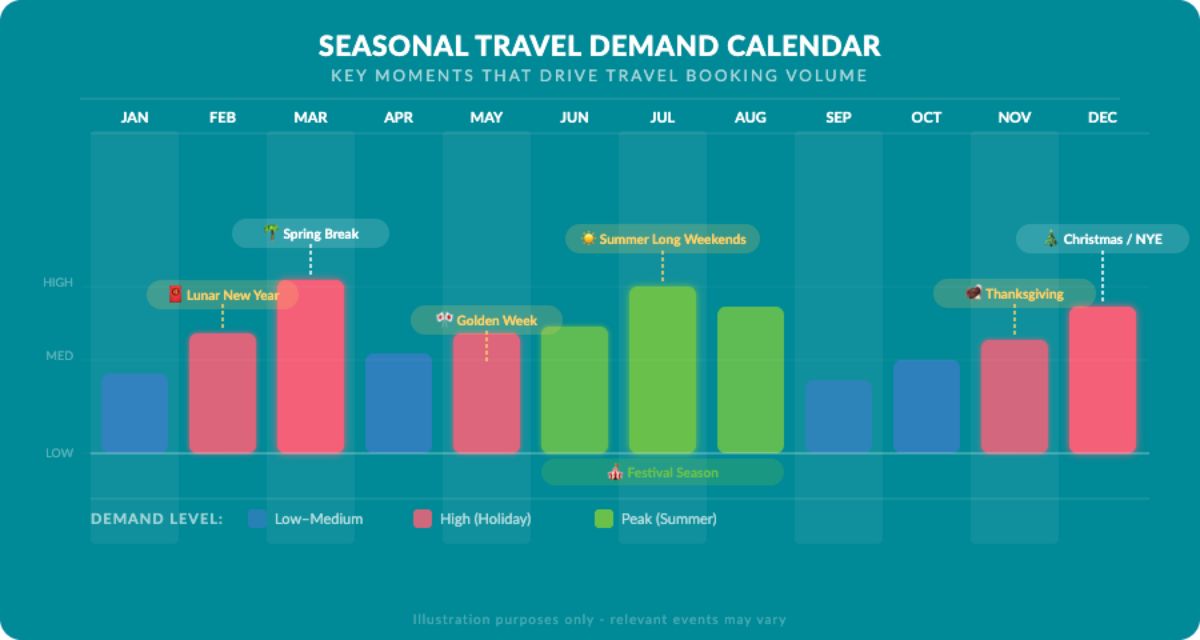
Seasonal spikes like spring break, holiday weekends, festivals, or cruise arrivals can be powerful revenue moments. The challenge is that most operators focus on when people travel, rather than when people actually decide to book, and those two moments are rarely the same. A traveler might take a tour during spring break, but the research and booking decisions often happen weeks earlier.
The operators who consistently outperform their competitors do something different. They don’t just focus on busy days. They focus on the booking windows and demand signals that appear before the travel period, and they build simple systems to capture that demand earlier and extend it longer.
Here are three practical steps to take to turn your seasonal demand spikes into measurable and repeatable performance.
Editor’s note: This article is a preview of an upcoming Arival | Elevate session, led by Dromonte Montgomery on the same topic. Find more details and register below:

1. Identify the Booking Window Behind Your Spike
Most operators know when their busiest travel periods occur. Fewer know when travelers actually decide to book.
For example, spring break demand often starts building weeks before travelers arrive. Families begin researching activities while planning flights and accommodations. That planning window is when operators have the greatest opportunity to capture attention.
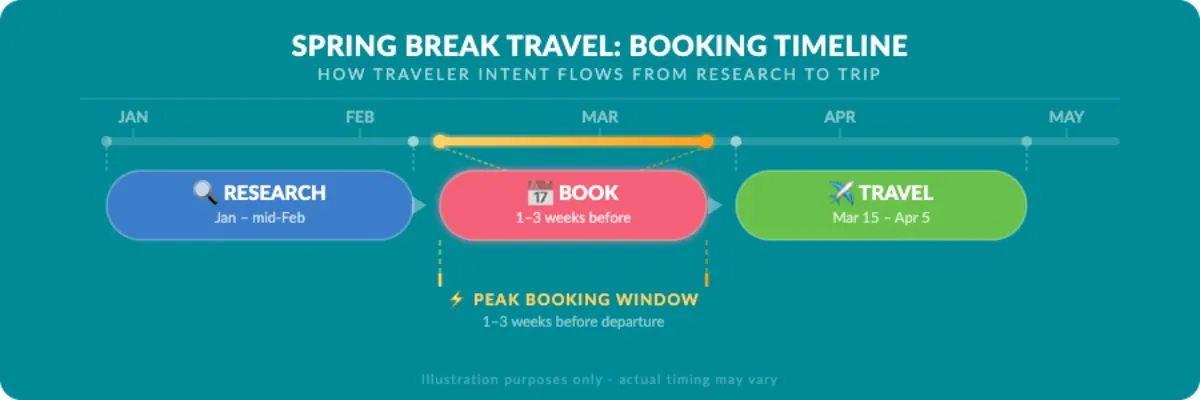
A simple way to identify your booking window is to look at historical bookings and calculate the number of days between booking date and experience date. You’ll usually find patterns such as:
- planners booking 2–4 weeks ahead
- last-minute travelers booking within a few days
- special-occasion travelers booking well in advance
Once you understand those patterns, you can align your marketing and messaging to the moment when travelers are deciding what to do, not just when they show up in your city.
Spring break provides a great example. If you see bookings typically begin three weeks before the trip, your marketing should start highlighting those experiences before that planning window opens, not after demand has already peaked.
12-15 Oct 2026 Insider Pro Access Members Save 20% THE event of the year for creators and sellers of destination experiences to connect, learn & grow. Don’t Miss Out! Get Your Ticket Today!
2. Build Seasonal Pages That Capture Planning Intent
When demand spikes, travelers are not simply searching for a single tour. They are looking for reassurance that they are making the right choice for their trip.
That means your best seasonal content should help them plan, not just sell. A strong seasonal page might include:
- a clear explanation of why the experience is ideal for that season
- a few suggested itinerary options
- practical logistics such as arrival timing, weather tips, and parking
- answers to common questions
- guidance on the best time to book
For example, a “Spring Break in [City]” page could combine your core experiences with helpful planning information. As summer approaches, the same structure can easily evolve into a “Best Summer Experiences in [City]” guide.
This type of content serves two purposes. It helps travelers confidently plan their activity, and it ensures your business appears early in the research process before competitors capture the booking.
3. Measure the Spike So You Can Repeat It
After the surge passes, many operators simply move on to the next season. But the most valuable insights often come from a quick review of what actually worked.
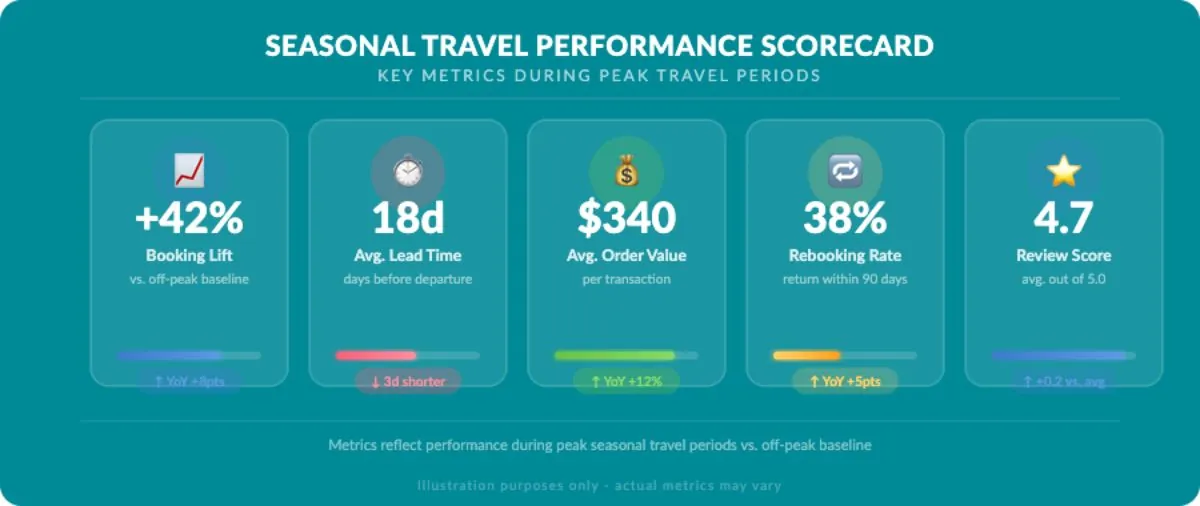
A short seasonal scorecard can help capture those lessons.
Key metrics to track might include:
| Metric | Why It Matters |
|---|---|
| Booking lift | Shows whether demand actually increased revenue |
| Lead time | Indicates whether marketing captured bookings earlier |
| Average order value | Reveals whether add-ons increased revenue per guest |
| Rebooking rate | Shows how well disruptions (such as weather changes or unexpected closures) were handled |
| Review volume and rating | Confirms guest experience quality during busy periods |
Even a short post-season review can reveal important patterns. For example, you might discover that spring break bookings begin earlier than expected, or that last-minute weekend travelers respond strongly to weather-driven messaging.
Those insights can then shape your strategy for the next seasonal spike. Over time, those metrics become the foundation of a repeatable seasonal playbook, allowing operators to refine what works and apply the same strategy to future demand moments like summer travel, festivals, and holiday periods.
Turning Spikes Into a Repeatable Playbook
Spring break is only one example of seasonal demand. The same principles apply to summer travel, festivals, cruise schedules, and holiday events.
When you understand clearly when your demand begins, provide helpful planning content to your potential customers, and review the performance afterward, seasonal spikes stop feeling unpredictable.
Instead of hoping for the next busy weekend, operators can build a repeatable playbook that turns moments of attention into consistent and measurable revenue growth.
About the Author

Dromonte Montgomery is Director of Growth Marketing at TravelSpike, where he focuses on helping travel brands turn audience insights into measurable demand. His work centers on understanding traveler intent, seasonal demand patterns, and strategies that convert attention into bookings.
Learn More about Capturing Seasonal Demand with Arival
Join us at the next Arival Elevate online event, where Dromonte Montgomery will share more about how to turn moments of peak demand into repeatable, revenue-driving strategies. The session is open to Arival Insider Pro Access members.
Become an Insider Pro Access member today and get access to the full library of Arival research, plus many other benefits such as free consulting sessions, special discounts and 20% off in-person events, starting from $179 per year.
Sign up to receive insights tailored for the in-destination industry as well as updates on Arival.
Header photo: Unsplash / Mike Cox