


When most people picture adventure travel, they picture something physical. Hiking or climbing a mountain. Careening over rapids. Screaming down a zipline (in my case, usually literally). The kind of experience that gets the heart pumping, the adrenaline flowing, and reminds you you’re alive.
But according to Shannon Stowell, CEO of the Adventure Travel Trade Association (ATTA) and our latest guest on the Best Part of Travel podcast, the biggest factor that’s actually driving growth in the adventure travel sector right now might surprise you.
Every year, the ATTA conducts a trends and insights survey of the adventure travel industry. And for the past 20 years, the results were fairly consistent: hiking, walking and trekking were the top activity drivers in adventure travel.
This year, that changed.
Culinary Takes the Lead
“ What was the surprise this year is that culinary became the number one driver in adventure travel,” says Stowell. “That is super interesting because to me it says that the culture piece is a huge part of it.”
But can food really be considered part of adventure travel? It depends in part by how you define it. According to Stowell, adventure travel needs to include at least two of these three elements: nature, culture and activity.
“One of the big shifts that we’ve seen happen over the years is that it used to be that activity was sort of how adventure travel was defined,” he says, “but now culture has emerged as the strongest of the pillars. That culture piece, meeting with people in different destinations, is really much more important to the traveler now than it was 25, 30 years ago.”
In other words, today’s adventure traveler isn’t just looking for a physical challenge. They want to immerse themselves culturally in the places they visit — and increasingly, food is the gateway to that immersion.
The practical implication for operators is clear, says Stowell: “Figure out how to work local food into your itineraries, and then make sure you market that too, because travelers are looking for it.”
12-15 Oct 2026 Insider Pro Access Members Save 20% THE event of the year for creators and sellers of destination experiences to connect, learn & grow. Don’t Miss Out! Get Your Ticket Today!
The Real Secret Ingredient: Connection
Dig a little deeper, though, and there’s something even more fundamental driving growth in adventure travel. In an era where travelers are increasingly surrounded by screens and inundated by AI, they’re seeking real life human connection.
“The human connection piece is massive,” says Stowell. “I think for me, it’s probably the most important part of the trip.
Stowell describes an experience hiking through the Dana Nature Preserve in Jordan. His guide pointed to the mountains and asked if they were the most beautiful he’d ever seen. Stowell, a Colorado native, wasn’t convinced. But what he’ll never forget is being invited to stop and share tea with a local Bedouin. “It was so obvious to me that the human connection part of travel is not only important, to me it’s like the number one pillar,” he says.

Beyond a cultural experience, this kind of meaningful connection experienced while traveling taps into that desire for meaningful travel, and beyond individual travelers, has the potential to build bridges between people and cultures.
“Travelers are all doing soft diplomacy, whether they realize it or not,” says Stowell. “It’s really hard to dislike or hate someone when you humanize and you meet them and you realize that maybe some biases or prejudices that we carry often do not hold true.”
It’s a sentiment that resonates far beyond adventure travel. For operators in any corner of the tours, activities and attractions industry, it’s a reminder that the most powerful thing an experience can deliver isn’t an epic view or an adrenaline-infused thrill or a perfect photo-op — it’s an authentic connection with another human being.
What This Means for Your Business
Travelers in 2026 are seeking depth, explains Stowell. They’re looking for experiences that offer meaningful connections to local culture, local people and local food. Operators who can deliver that, and who make sure they’re communicating it clearly in their marketing, are well positioned to capture this growing demand.
The good news is that neither of these things — food or human connection — requires a complete product overhaul. It might be as simple as partnering with a local restaurant or chef, hiring or partnering with guides from within the communities your tours visit, or finding a way to build a shared meal into an experience that didn’t have one before. Small changes like these can make all the difference.
Listen To / Watch the Full Conversation
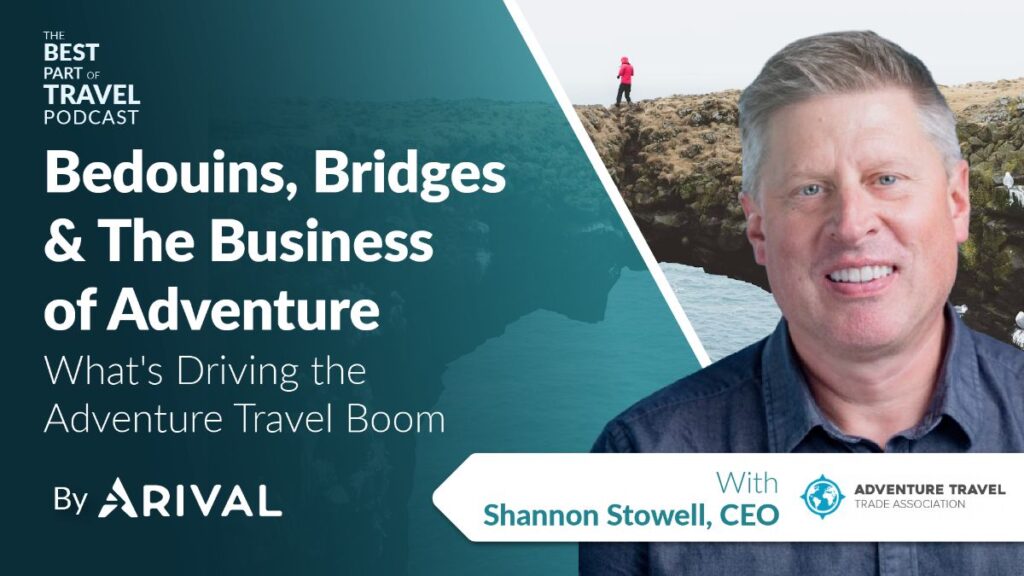
This is just a glimpse of the wide-ranging conversation we had with one of adventure travel’s most thoughtful leaders. In the full episode of The Best Part of Travel podcast, we discuss the definition and opportunity of adventure travel, responsible tourism and the resilience of the travel industry in the face of geopolitical uncertainty, and why travel, done right, has the power to make the world a better place.
Listen to or watch the full episode of The Best Part of Travel on Spotify, YouTube, or wherever you get your podcasts.
Become an Insider Pro Access member today and get access to the full library of Arival research, plus many other benefits such as free consulting sessions, special discounts and 20% off in-person events, starting from $179 per year.
Sign up to receive insights tailored for the in-destination industry as well as updates on Arival.
Header photo: Pexels / Achraf Rouad