



Dynamic pricing is suddenly the hot topic of tours, activities and attractions. However, when I speak with operators, I often hear some version of the same sentence: “We already do dynamic pricing.”
And in most cases, they don’t.
That’s not criticism. Most operators are already doing something more advanced than flat pricing, and that’s a good thing. But much of what gets called “dynamic pricing” is really rules-based pricing, last-minute discounting, or competitor matching. Those strategies can be useful, but they are not the same as pricing that actually responds to demand.
Here are three things operators often get wrong (and what to do instead).
Editor’s note: This article is a preview of an upcoming Arival | Elevate session, led by Daniel Pino on the same topic. Find more details and register here:

1. “We adjust prices based on seasons, days, or availability — that’s dynamic pricing”
Seasonal pricing, weekend pricing, lead-time pricing and capacity-based pricing are all useful steps forward.
If your summer demand is consistently stronger than winter demand, it makes sense to charge more in summer. If Saturdays usually perform better than Tuesdays, it may make sense to price Saturdays higher. If your last few seats are more valuable than your first few, capacity-based pricing can help.
These are all better than charging the same price every day, all year.
But they are still rules.
And the problem with rules is that they assume demand will behave as expected.
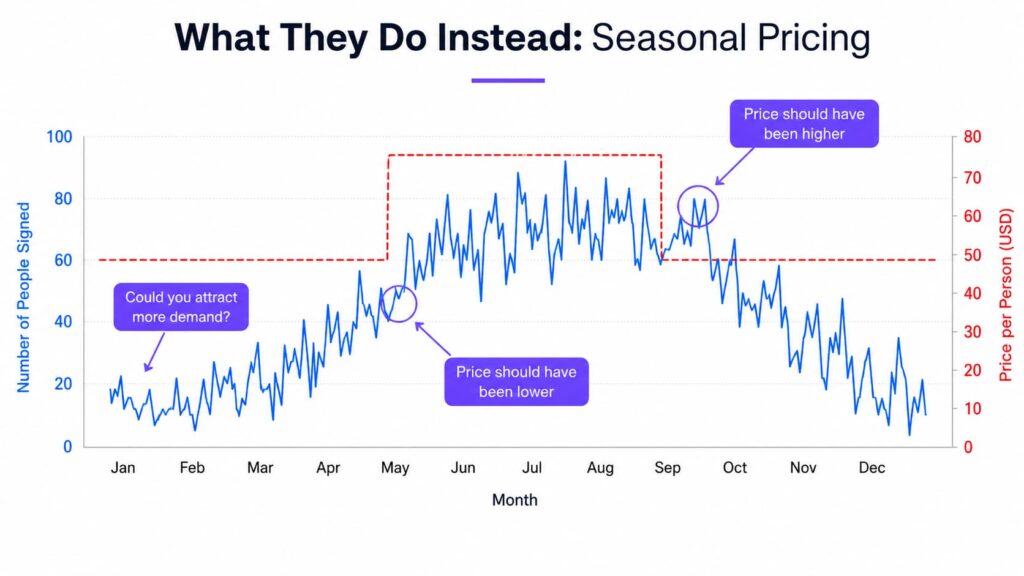
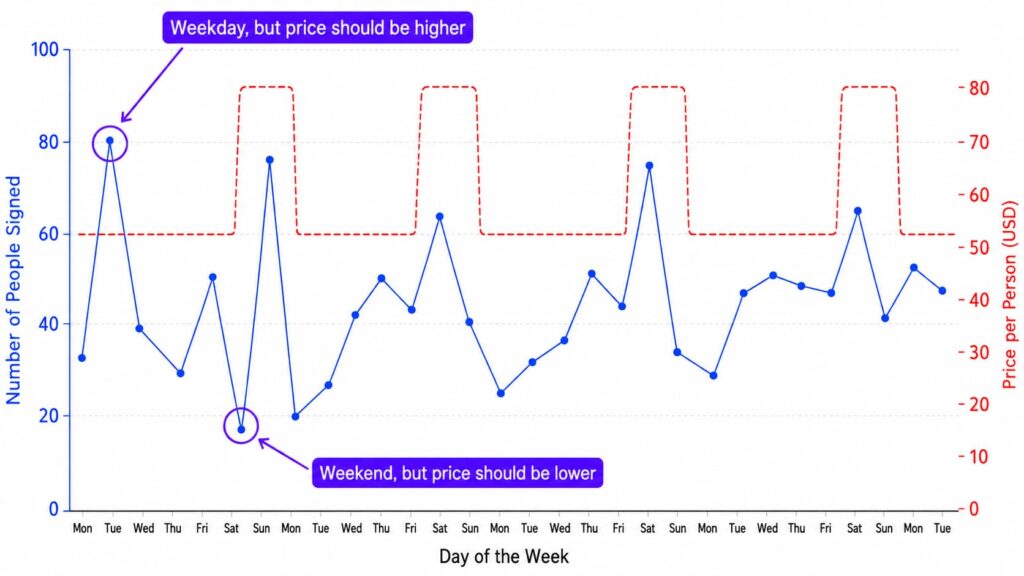
A seasonal rule assumes the high season will always be strong. A weekend rule assumes weekends will always outperform weekdays. A capacity rule assumes the number of seats sold tells you enough about future demand.
Sometimes those assumptions are right. Often, they are directionally right. But not always.
A random Tuesday can outperform a Saturday. A high-season departure can suddenly slow down. A tour can have 50% of its capacity sold two weeks out and still be in trouble if new bookings stop coming in. Another tour can have the same number of seats sold and be in great shape because booking pace is accelerating.
Seasonal Pricing Fallouts
Weekend Pricing Fallouts
That’s the key difference.
Dynamic pricing is not about creating better rules. It’s about reducing your dependence on rules.
That difference matters because revenue is rarely lost in average conditions. It is lost when reality deviates from the plan.
13-15 April 2027 Insider Pro Access Members Save 20% THE event of the year for the European in-destination experiences industry Save up to €850 with an Autumn Advantage Ticket as an Insider Pro Member!
2. “Dynamic pricing is about filling empty spots last minute”
This is one of the most common misconceptions, and it makes complete sense from an operator’s perspective.
If a tour is half full, lowering the price feels logical. The guide is already scheduled. The vehicle is already going. The cost of adding one more guest may be low. So, the thinking goes: any extra booking is better than an empty seat.
That is exactly how many operators first think about dynamic pricing.
The problem is that this view starts from the operator’s needs, not from customer behavior.
If pricing should be following demand, and most of your bookings are coming in the last 7 days prior to the activity, dropping your price in this period is conflicting with the whole concept of dynamic pricing.
A traveler booking close to departure is often already at the destination. They may be walking around the city, checking availability on their phone, deciding what to do that afternoon or tomorrow morning. At that point, they are not always optimizing for the lowest price. They are often optimizing for timing, convenience, location, availability and confidence that they are making the right choice.
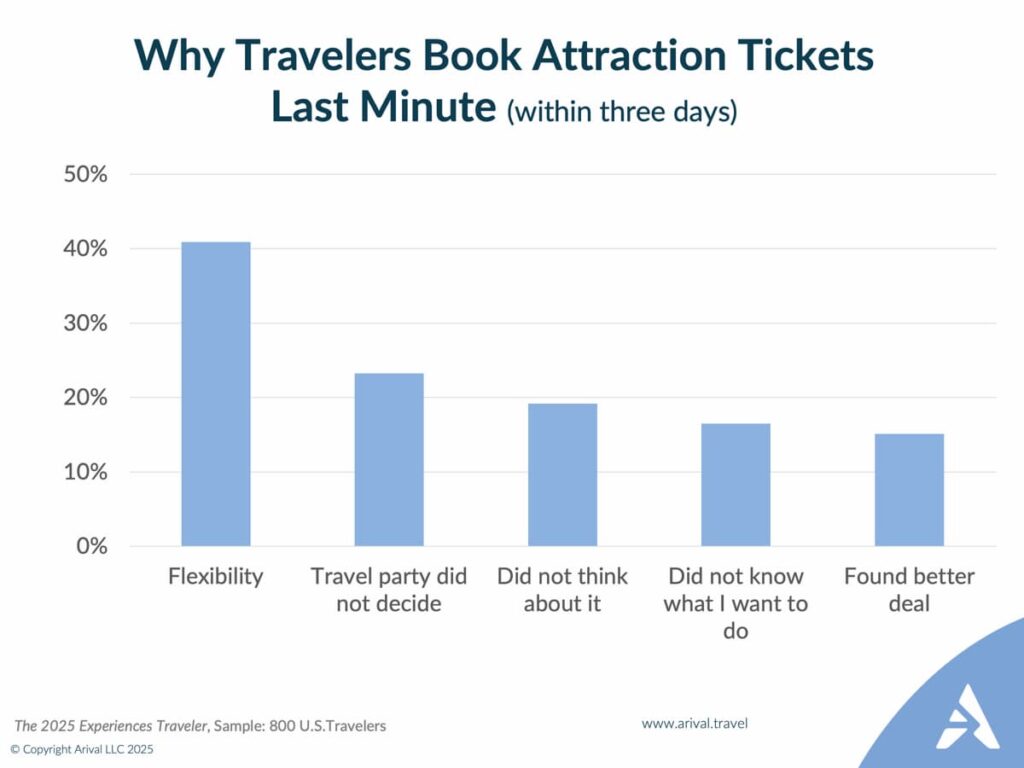
Research from Arival supports this. Among travelers booking attraction tickets within three days, the top reason was flexibility at 41%. Only 15% said they booked late because they found better deals.
By contrast, among those booking at least three days in advance, 33% cited better pricing and 32% cited availability concerns.
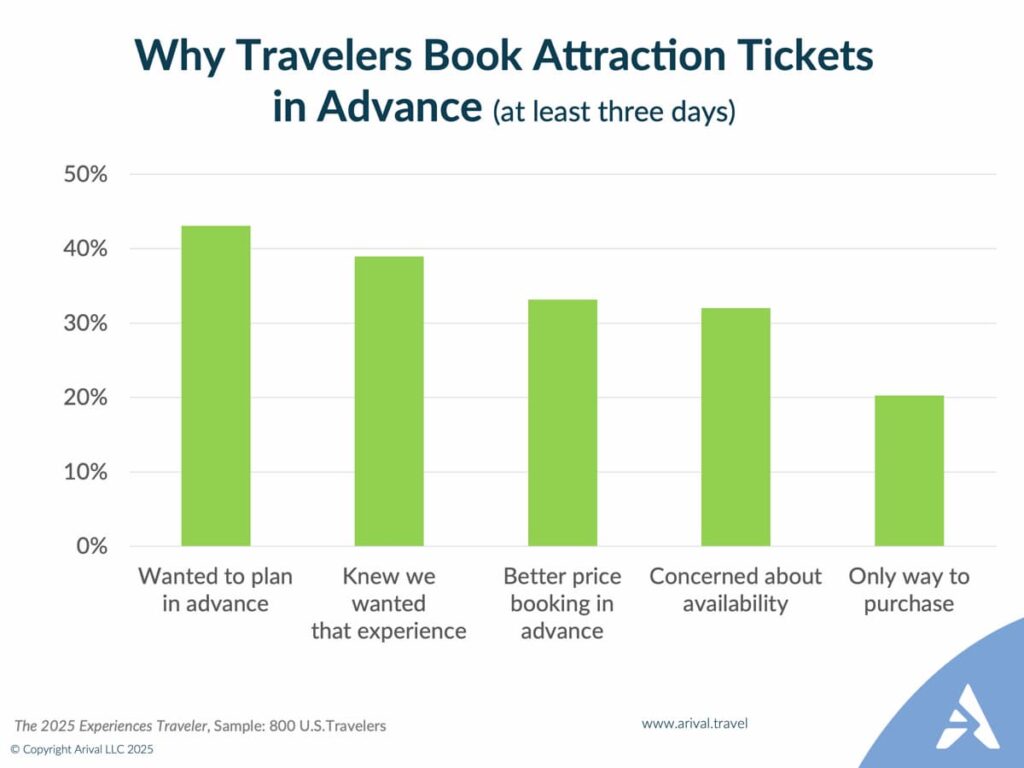
In plain English: early bookers are more likely to care about price and availability. Last-minute bookers are more likely to care about flexibility.
Therefore, if you want to use price to shape demand, the question should not be, “How do I fill empty seats at the last minute?”
The better question is, “Is my pricing reflecting the current demand for my tour?”
Last-minute discounting often feels good because the tour looks fuller. But that certainly can’t be considered dynamic pricing.
3. “Changing prices will damage my brand”
This is the fear that comes up once operators understand what dynamic pricing actually means.
“What if guests notice?”
“What if someone complains?”
“What if people think we are taking advantage of them?”
Those are fair concerns. Nobody wants customers to feel tricked. Nobody wants a guest to book on Monday, see a lower price on Wednesday and feel like they were punished for buying early.
But the issue is not that prices change. Travelers already accept changing prices across much of travel.
They see it in flights. They see it in hotels. They see it in concerts and sporting events. They see it in train tickets, timed-entry attractions and even parking. Customers understand that prices move.
What they dislike is pricing that feels arbitrary, extreme or unfair. That is a very different problem.
Dynamic pricing done poorly can absolutely create trust issues. If prices swing wildly, if channels are inconsistent, if guests feel like there is no logic behind the price, or if loyal customers feel punished, then yes, the brand can suffer.
But that is not an argument against dynamic pricing. It is an argument for doing it properly.
Good dynamic pricing should operate within guardrails. Operators should define reasonable minimum and maximum prices. Price changes should be controlled, not chaotic. Early planners should feel rewarded, not penalized. Promotions should be intentional. Channel strategy should be clear enough that guests and partners are not confused.
In other words, dynamic pricing should not feel like a casino.
It should feel like a rational response to demand.
Customers do not hate changing prices. They hate prices that feel unfair. That distinction matters.
What dynamic pricing should actually do
The goal of dynamic pricing is not to be more expensive. It is also not to be cheaper.
Done correctly, dynamic pricing is not about constantly changing prices for the sake of it. It is about closing the gap between what demand is doing and how pricing responds.
Sometimes that means raising prices. Sometimes it means lowering them. Sometimes it means doing nothing.
Because in this industry, every departure is perishable., every unnecessary discount eats margin, and every missed high-demand moment leaves revenue behind.
That is what dynamic pricing should actually solve.
About the Author

Daniel Pino is the founder of Aloja, an AI-powered dynamic pricing engine for tour and activity operators. He previously built TourOpp, which was acquired by RocketRez in 2023. Over the last decade, Daniel has worked across the experiences industry as a licensee, partner, founder and product leader, focused on helping operators grow stronger businesses.
Learn More about Dynamic Pricing with Arival
Dig deeper into what effective dynamic pricing for tour operators and attractions can look like in practice with Daniel Pino at the next Arival | Elevate online session on Thursday, 28 May 2026, at 11am EDT / 5pm CEST. Open to Arival Insider Pro Access members: register here.
Also, join us for an upcoming Arival event to learn more about pricing strategies, growing your revenue, and scaling your business during THE event of the year for creators and sellers of tours, activities, attractions & experiences. Incidentally, our event prices are not dynamic — you will always get the best price the further in advance you book.
Become an Insider Pro Access member today and get access to the full library of Arival research, plus many other benefits such as free consulting sessions, special discounts and 20% off in-person events, starting from $179 per year.
Sign up to receive insights tailored for the in-destination industry as well as updates on Arival.
Header photo: Pexels / Kaboompics